01.05.2026

As dusk dims the corners of the region, remote sensors at Cape Leeuwin Lighthouse and Cape Naturaliste Lighthouse light up sending out their signature flashes across the Southern and Indian Oceans. But it wasn’t always so effortless.

For decades, both lights ran purely on kerosene and the sweat of lighthouse keepers working around the clock, 365 days a year. Today’s keepers of these category-one lighthouses, Paul Sofias and Tod Kearns, speak with the weathered wisdom, gruelling work and great ingenuity of those before them, that’s kept the lights on.

Hero image: Tim Campbell

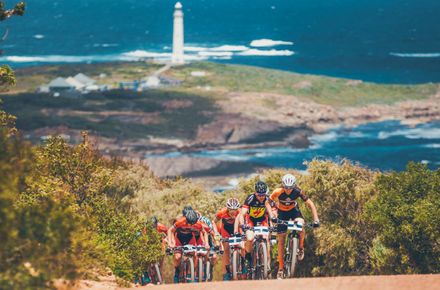
Cape Leeuwin Lighthouse. Image: Tim Campbell

Powering the brightest lighthouse on Earth

Paul takes us right back to the evening of 10 December 1896, when Cape Leeuwin’s light was first lit. “Not only was – and still is – Cape Leeuwin Lighthouse the tallest light on mainland Australia, but it was also the most powerful light in Australia at that time.”

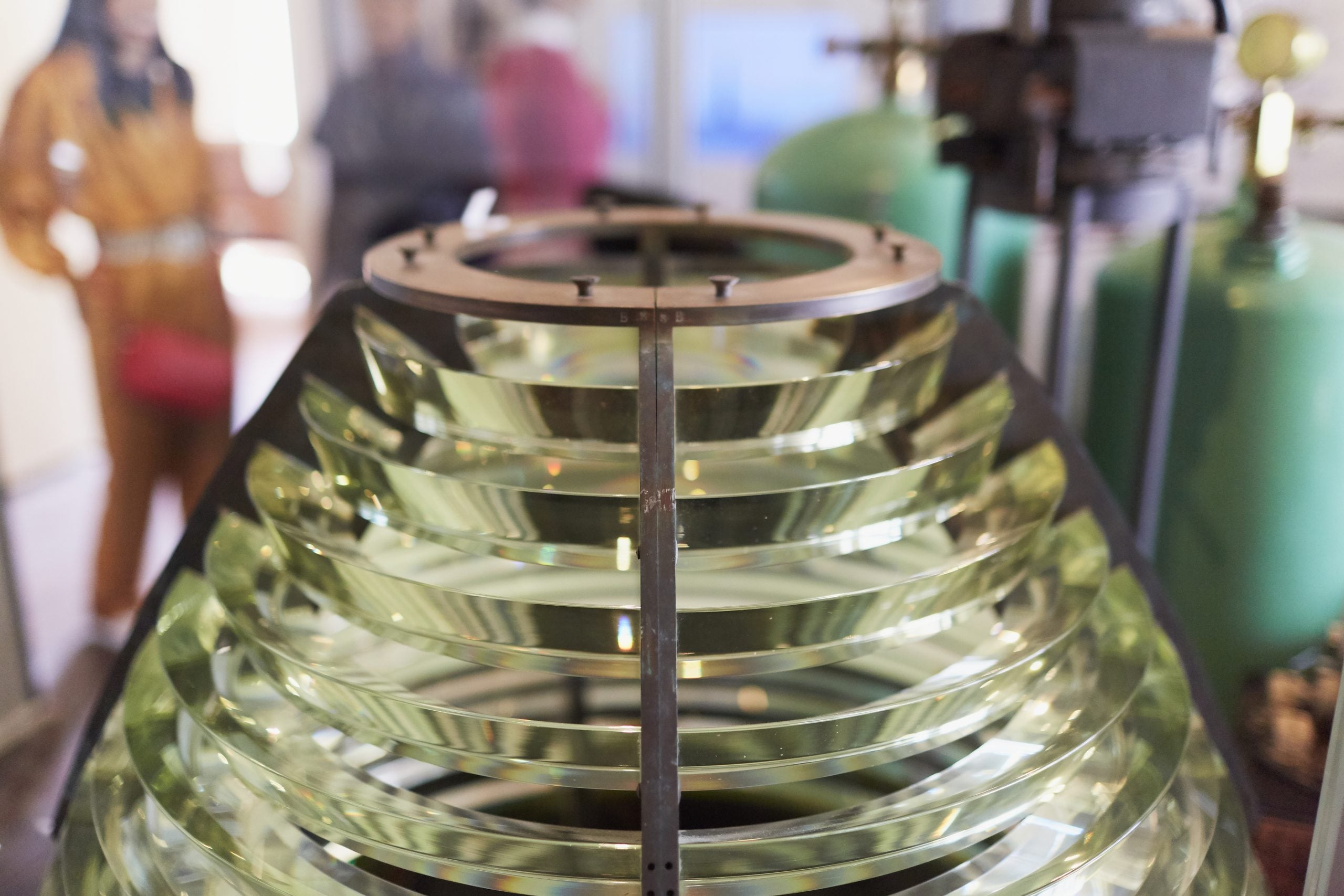
With six linen wicks in its kerosene lamp, magnified by a First Order Chance Brothers Fresnel lens (rotating on a bath of mercury), the original light beamed at 250,000 candle power across 37 kilometres.

Keeping those wicks burning and the lens turning was a 24-hour job shared by three keepers in the early years at Cape Leeuwin Lighthouse.

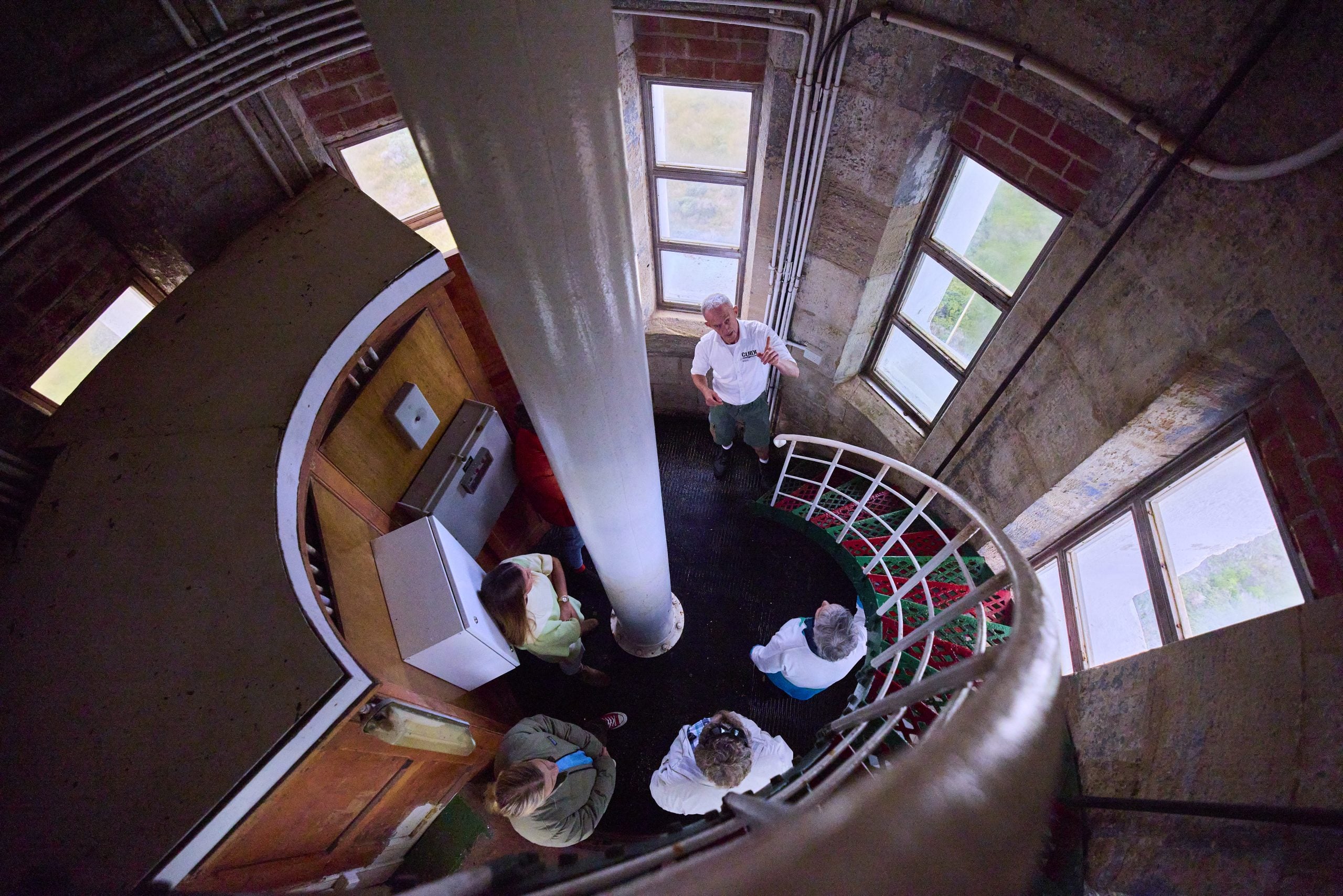
“During daylight hours, they’d carry up to70 litres of kerosene up 152 steps to refill the fuel tanks in the lantern room,” says Paul. “Then, through the night shift, they hand-pumped kerosene every half hour and wound the clockwork mechanism to turn the lens. That meant hand-cranking the handle 160 times to lift a 150kg counterweight 12 metres up the tower every two hours.”

There was nothing light about a lighthouse keeper’s job in those days, that’s for sure. They had to be completely self-sufficient, including growing their own food. They were granted just a few hours off together to be with their families on Christmas morning.

Twelve years later, the six-wick lamp was replaced with a cleaner-burning and much more efficient mantle lamp that blasted out 450,000 candle power. However, the labour intensity remained as demanding as ever.
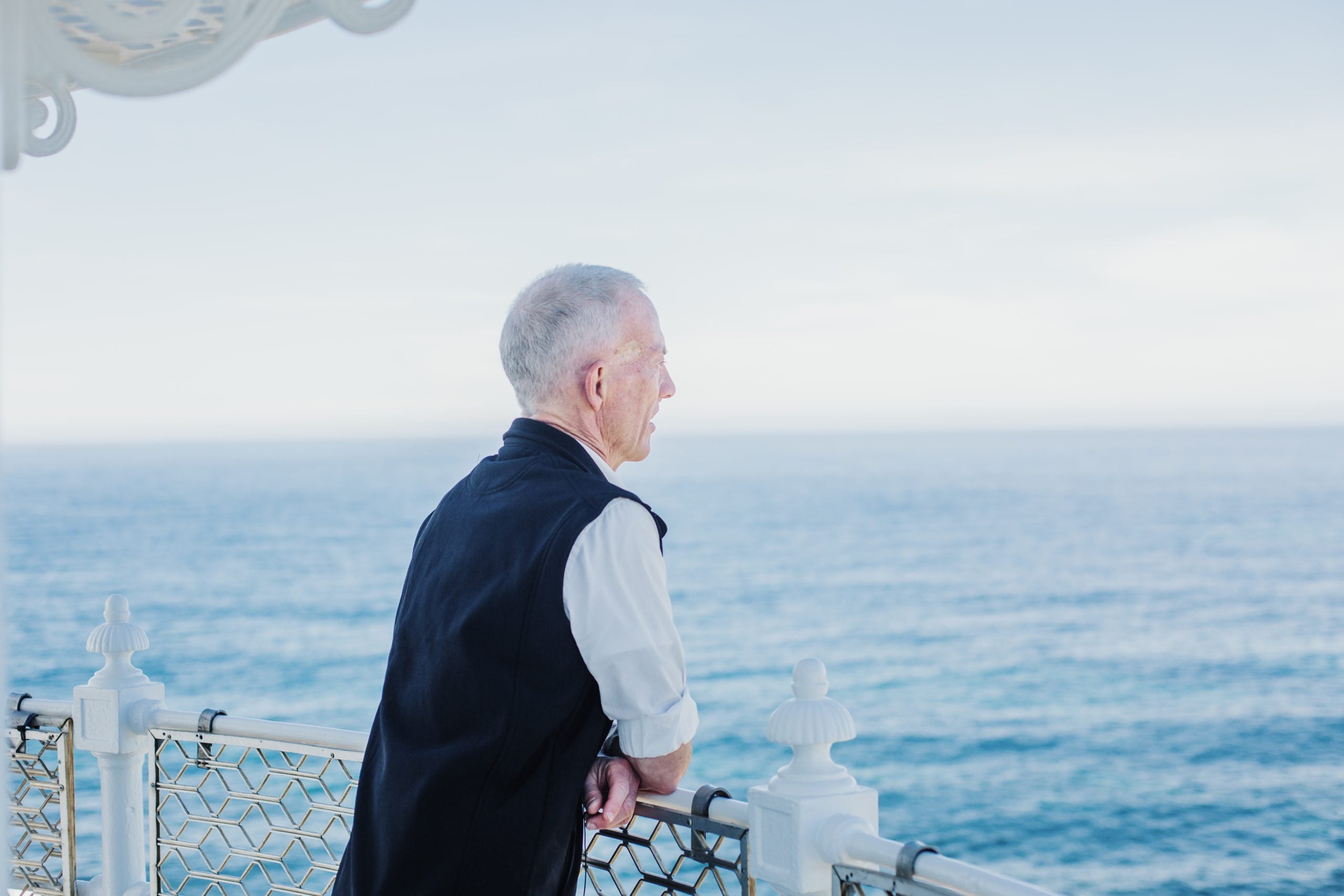
Paul Sofias at Cape Leeuwin lighthouse. Photo: Tim Campbell

Who had it tougher? Cape Leeuwin or Naturaliste?

Tod Kearns of Cape Naturaliste Lighthouse is confident his predecessors would win that argument.

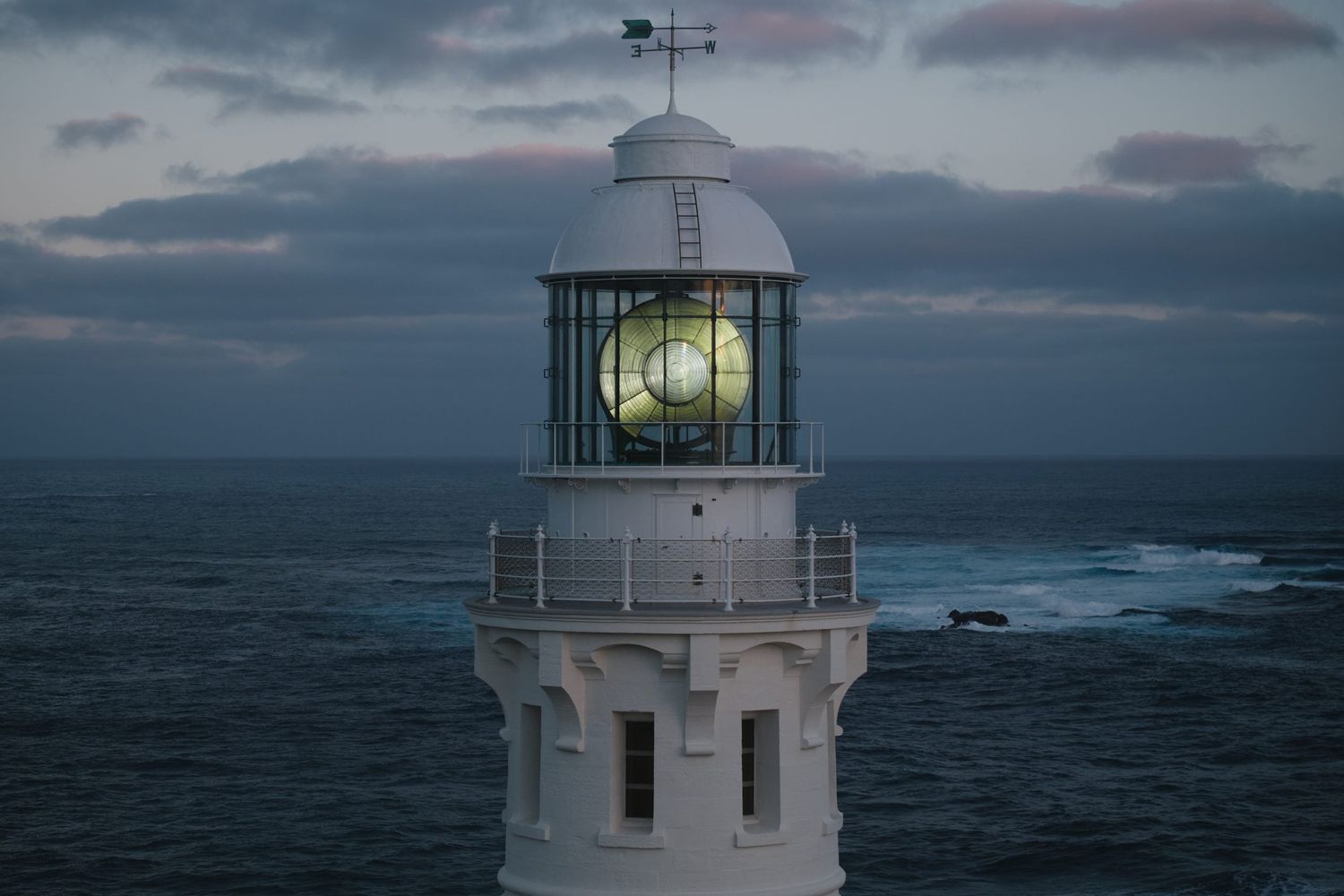
“If your lighthouse is three times shorter, you need to wind up the counterweight three times as often,” says Tod. “When the light keepers were up in the lantern room refuelling with kerosene, it was like working on the world’s tallest merry-go-round! The entire floor is a rotating turntable that spins on a 10-second cycle.”

Records include a whole series of telegrams from lighthouse keepers writing to the maritime authority reporting dizziness and nausea. One writes, “Please never design another lighthouse like this ever again. It’s a complete disaster!” They took that advice and it remains a unique feature to this day.

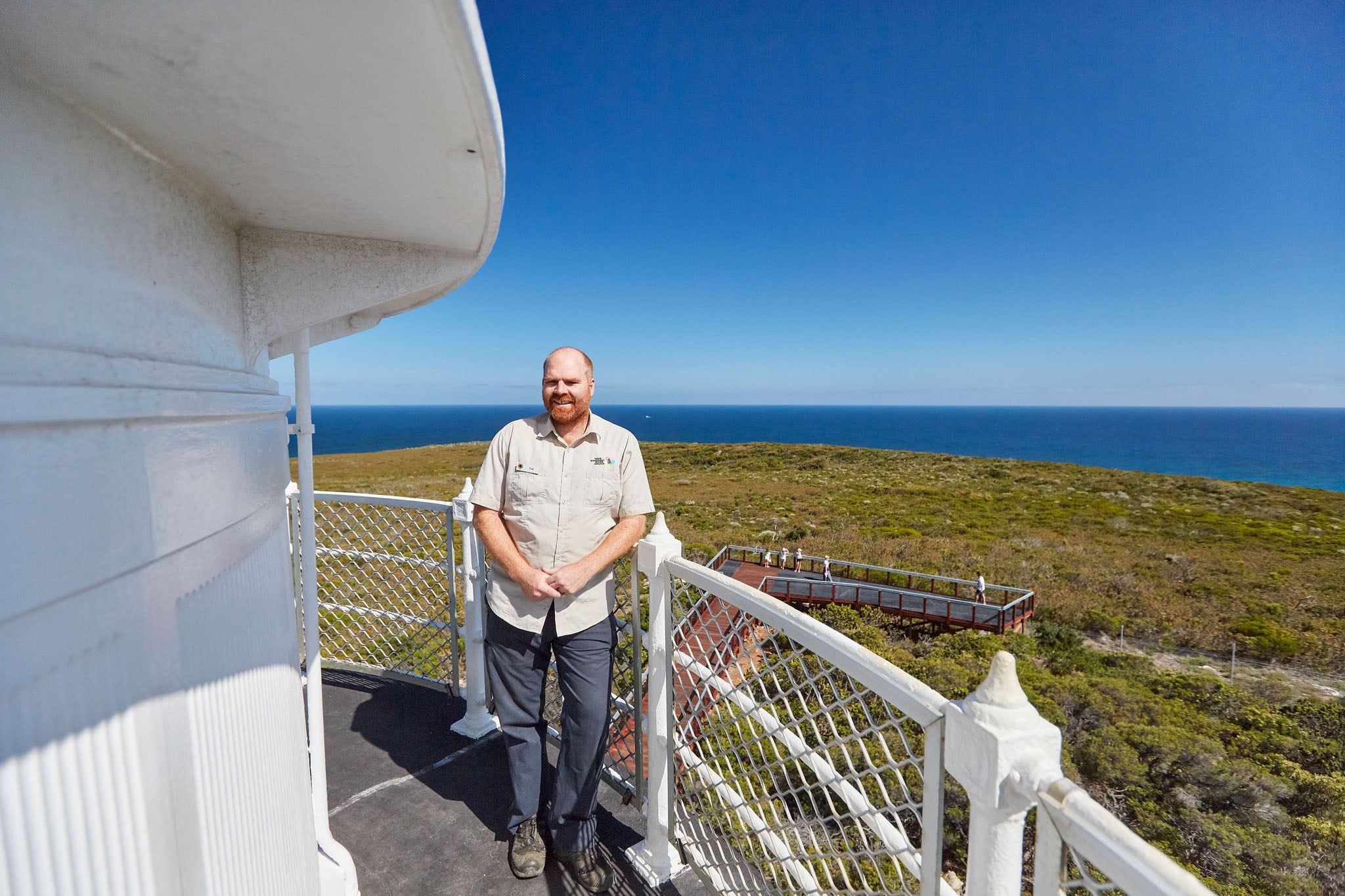
Tod Kearns at Cape Naturaliste Lighthouse. Image: Tim Campbell

The big switch that changed everything

Electrification finally reached Cape Naturaliste Lighthouse in 1978 with Cape Leeuwin following in 1982, making it the last lighthouse in Australia to make the big switch.

Electric power, with a generator for back-up, made working life at the lights infinitely easier. The kerosene lamps were replaced with 1000-watt globes, and the clockwork mechanisms ground to a halt as electric motors turned the lenses.

The lights run on surprisingly little power, especially since the addition of energy-efficient LEDs in 2017. Paul often says, if you had a big TV and a reasonable sound system in your movie room, they’d probably use as much power as the lighthouse.

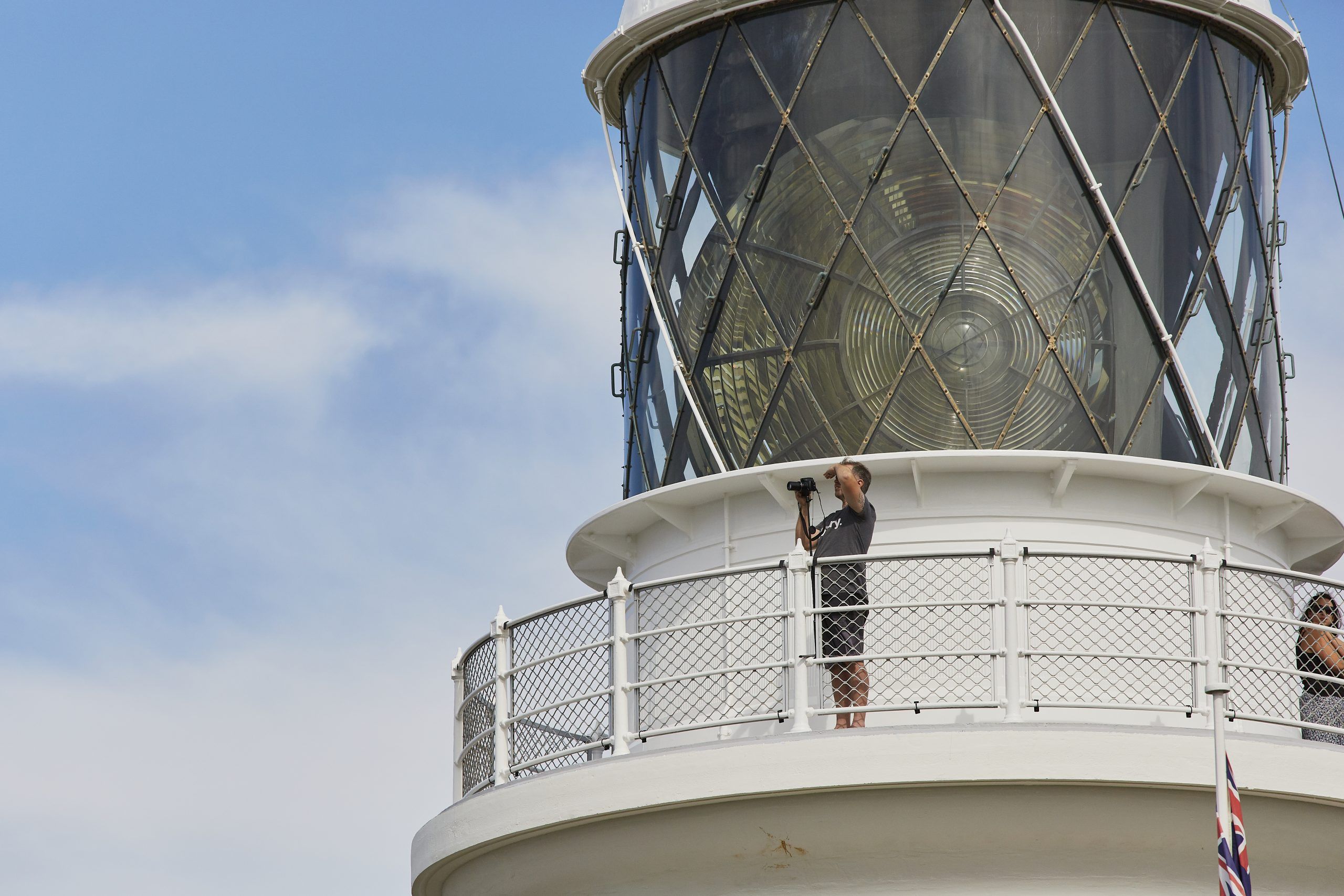
Cape Naturaliste Lighthouse. Photo: Tim Campbell

How many lighthouse keepers does it take to change a lightbulb?

“None!” laughs Paul. “It actually takes two electricians to do that job.”

Since electrification, the original team of two lighthouse keepers was reduced to just one in the 1980s. Then, in 1992, the addition of light sensors brought complete automation. That meant the traditional role of the lighthouse keepers became obsolete, along with the old lamps and clockwork mechanisms.

That said, you can still see the original lenses and many of the old internal workings of the lighthouse as you climb the towers on a guided tour and explore the museums at Cape Leeuwin and Cape Naturaliste. You’re also likely to experience one of the rarest encounters on Earth here, meeting a modern-day lighthouse keeper. Both Paul and Tod are regular guides at the two lighthouses.

Lighthouse lighting of the past, at the Cape Leeuwin Interp Centre. Photo: Tim Campbell.

Advice from a Local

Speak to a local expert Advice from a Local Our team of local experts

Our team of local experts are here to help plan and book your stay in the Margaret River Region.