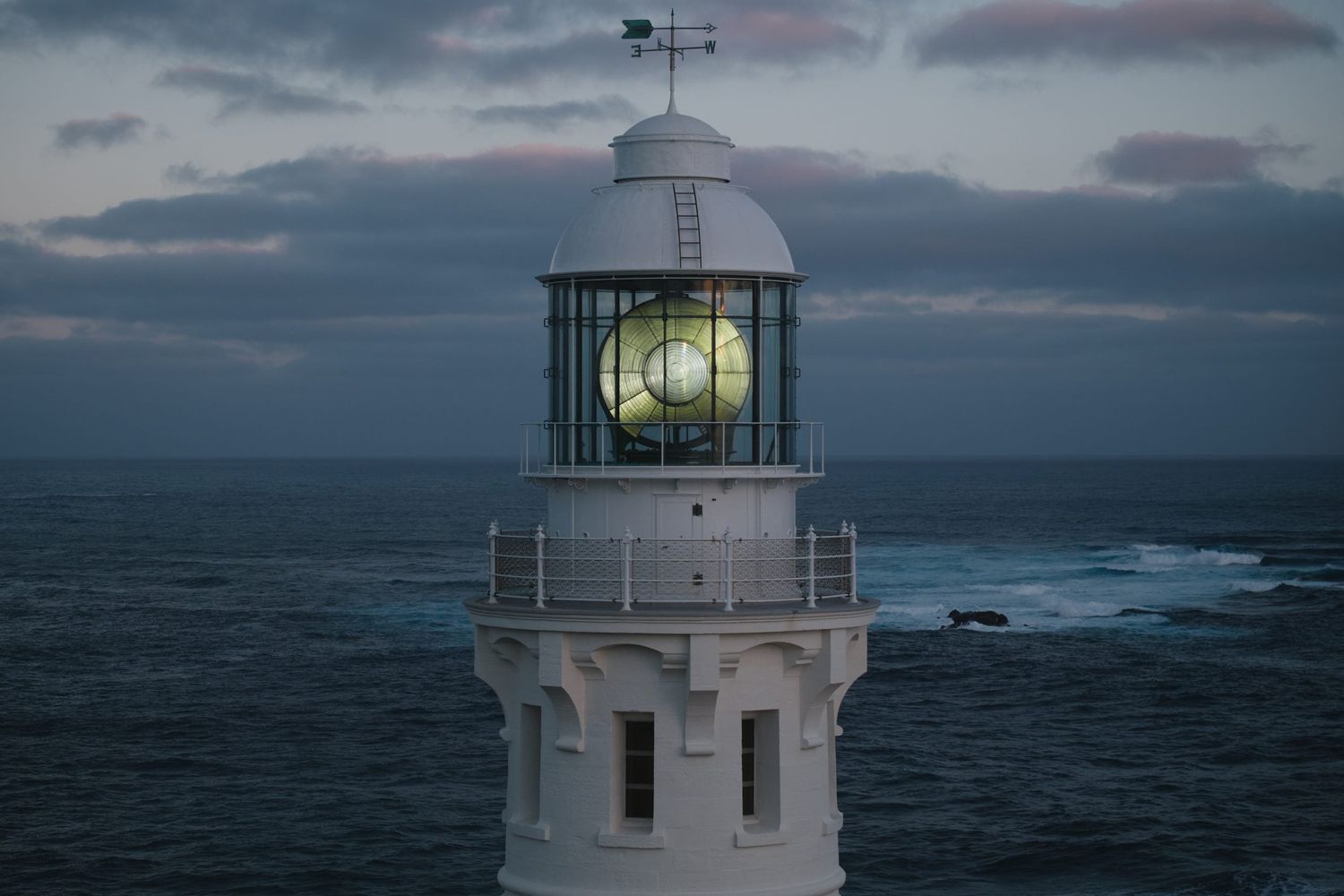
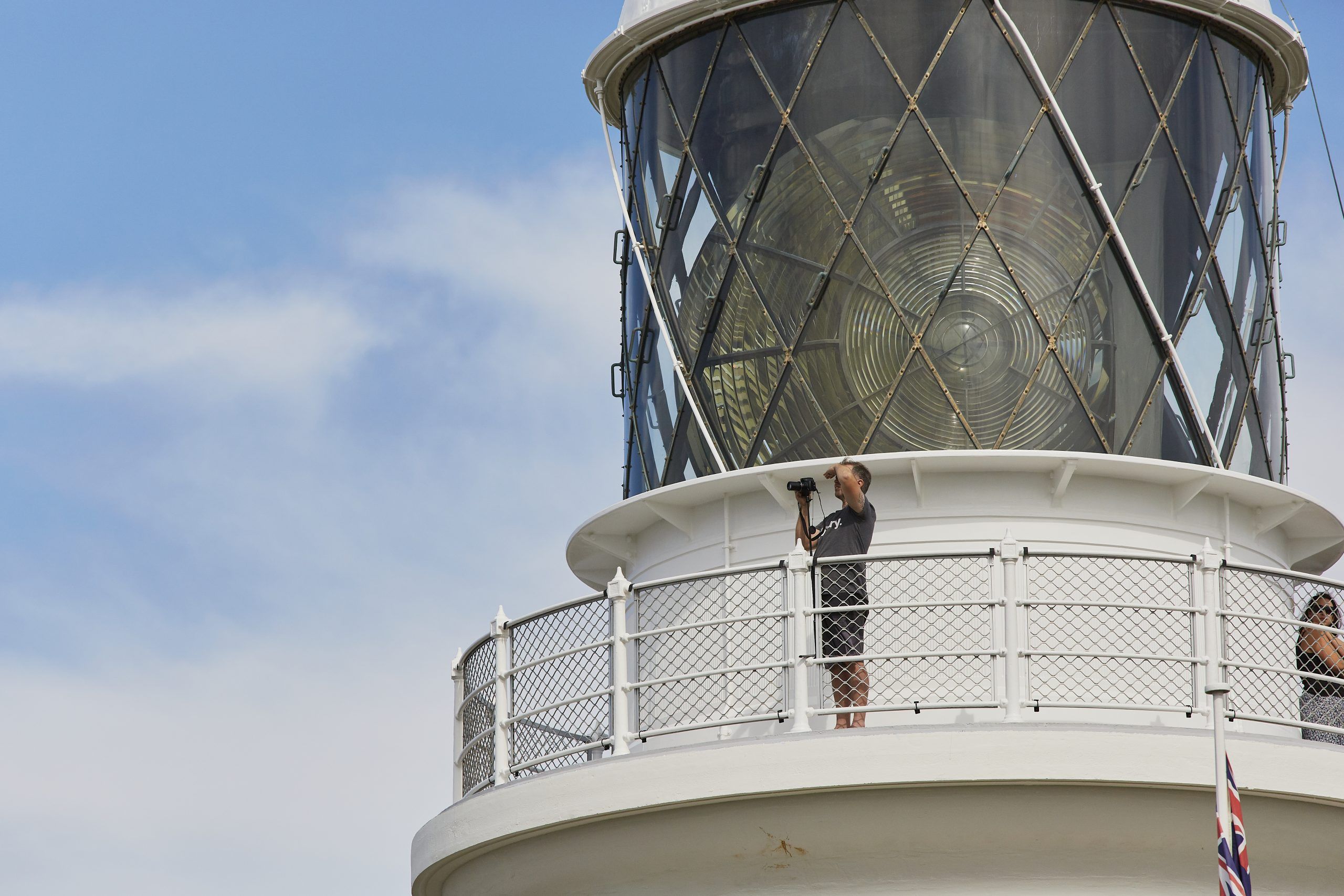
Paul takes us right back to the evening of 10 December 1896, when Cape Leeuwin’s light was first lit. “Not only was – and still is – Cape Leeuwin Lighthouse the tallest light on mainland Australia, but it was also the most powerful light in Australia at that time.”
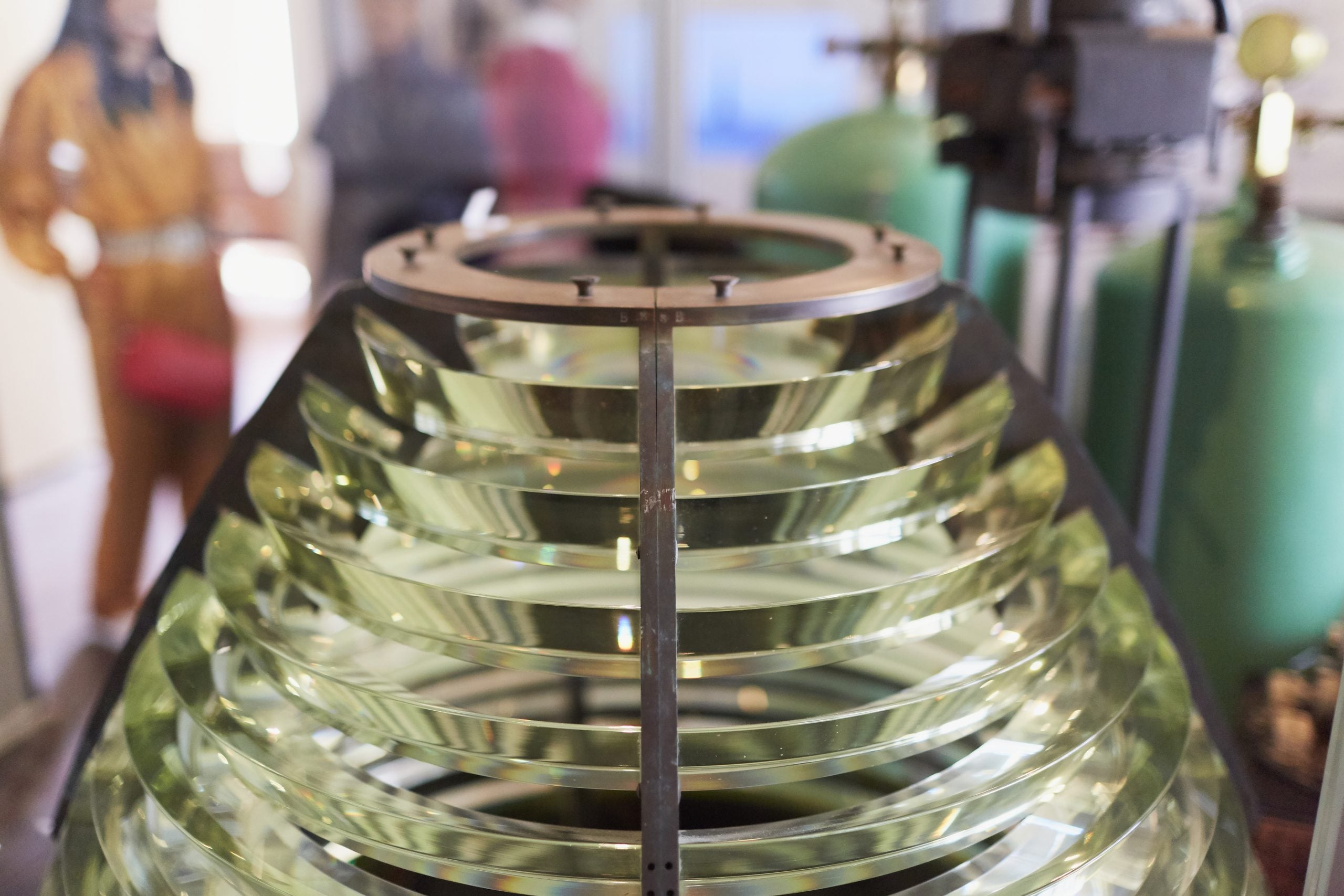
With six linen wicks in its kerosene lamp, magnified by a First Order Chance Brothers Fresnel lens (rotating on a bath of mercury), the original light beamed at 250,000 candle power across 37 kilometres.
Keeping those wicks burning and the lens turning was a 24-hour job shared by three keepers in the early years at Cape Leeuwin Lighthouse.
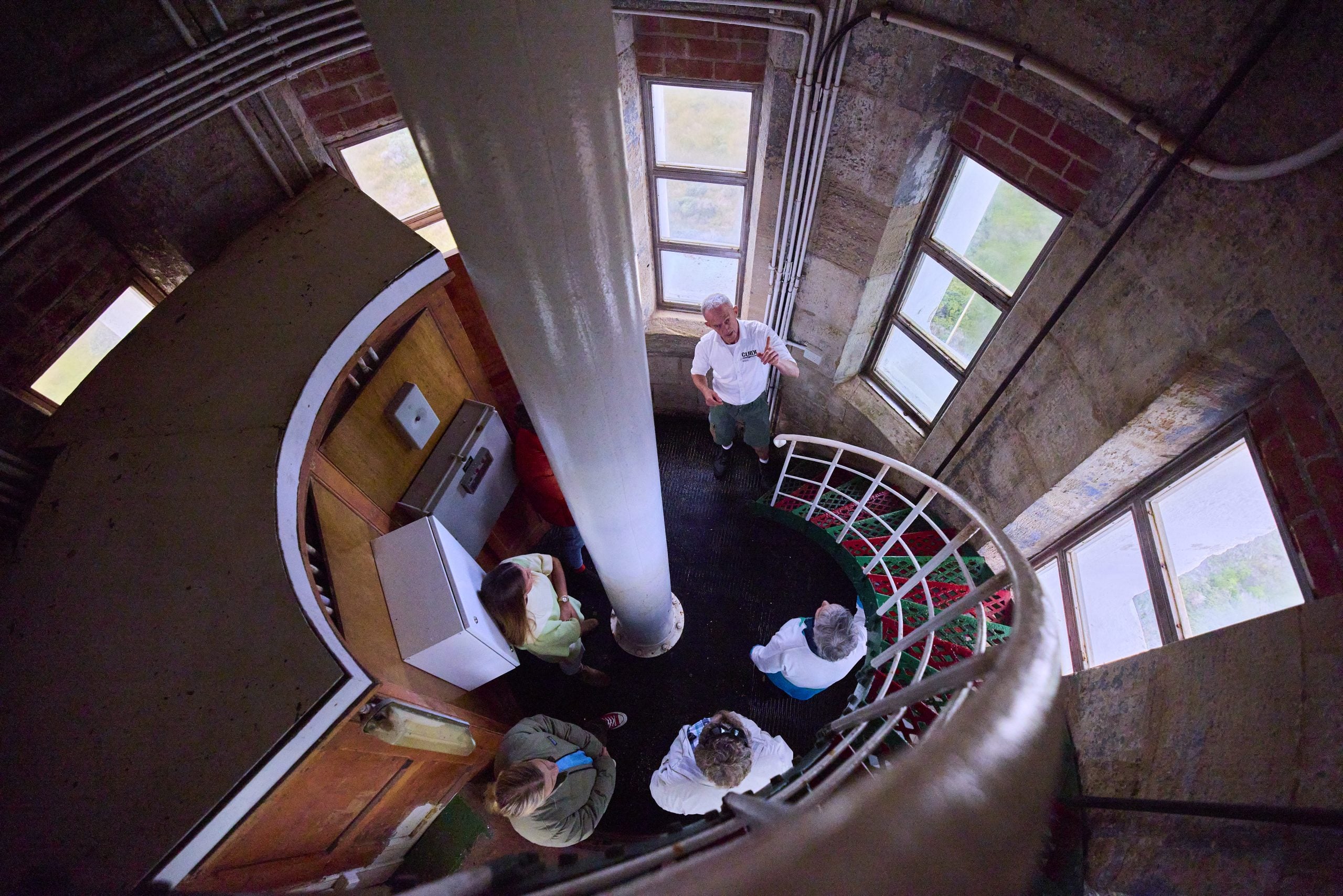
“During daylight hours, they’d carry up to70 litres of kerosene up 152 steps to refill the fuel tanks in the lantern room,” says Paul. “Then, through the night shift, they hand-pumped kerosene every half hour and wound the clockwork mechanism to turn the lens. That meant hand-cranking the handle 160 times to lift a 150kg counterweight 12 metres up the tower every two hours.”
There was nothing light about a lighthouse keeper’s job in those days, that’s for sure. They had to be completely self-sufficient, including growing their own food. They were granted just a few hours off together to be with their families on Christmas morning.
Twelve years later, the six-wick lamp was replaced with a cleaner-burning and much more efficient mantle lamp that blasted out 450,000 candle power. However, the labour intensity remained as demanding as ever.