21.04.2026

Dappled sunlight filters through the marri trees as wild birds dart between the banksias. Nestled in the serene bushland of Margaret River, Capes Raptor Centre feels like the perfect refuge for injured and orphaned raptors to gain strength before returning to the wild, and an ideal home for those who cannot.

Each morning at the centre begins long before the visitors arrive. A small, dedicated team moves amongst the aviaries, checking on the patients and residents.

Although the bushland is beautiful, this work isn’t for the faint-hearted. It’s all-weather, involves gory food prep, and calls for cleaning up some serious muck. A passion for the job is essential.
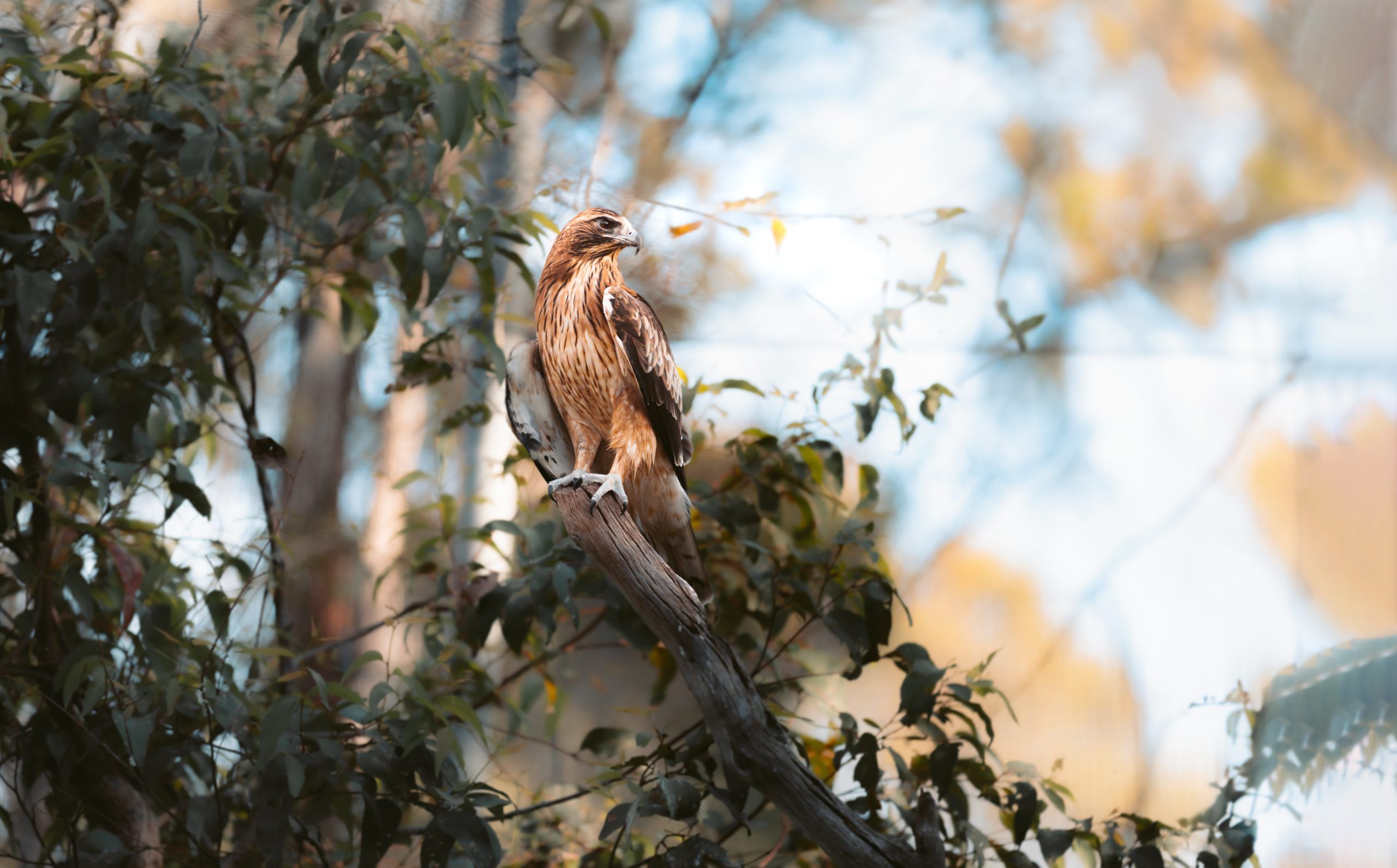
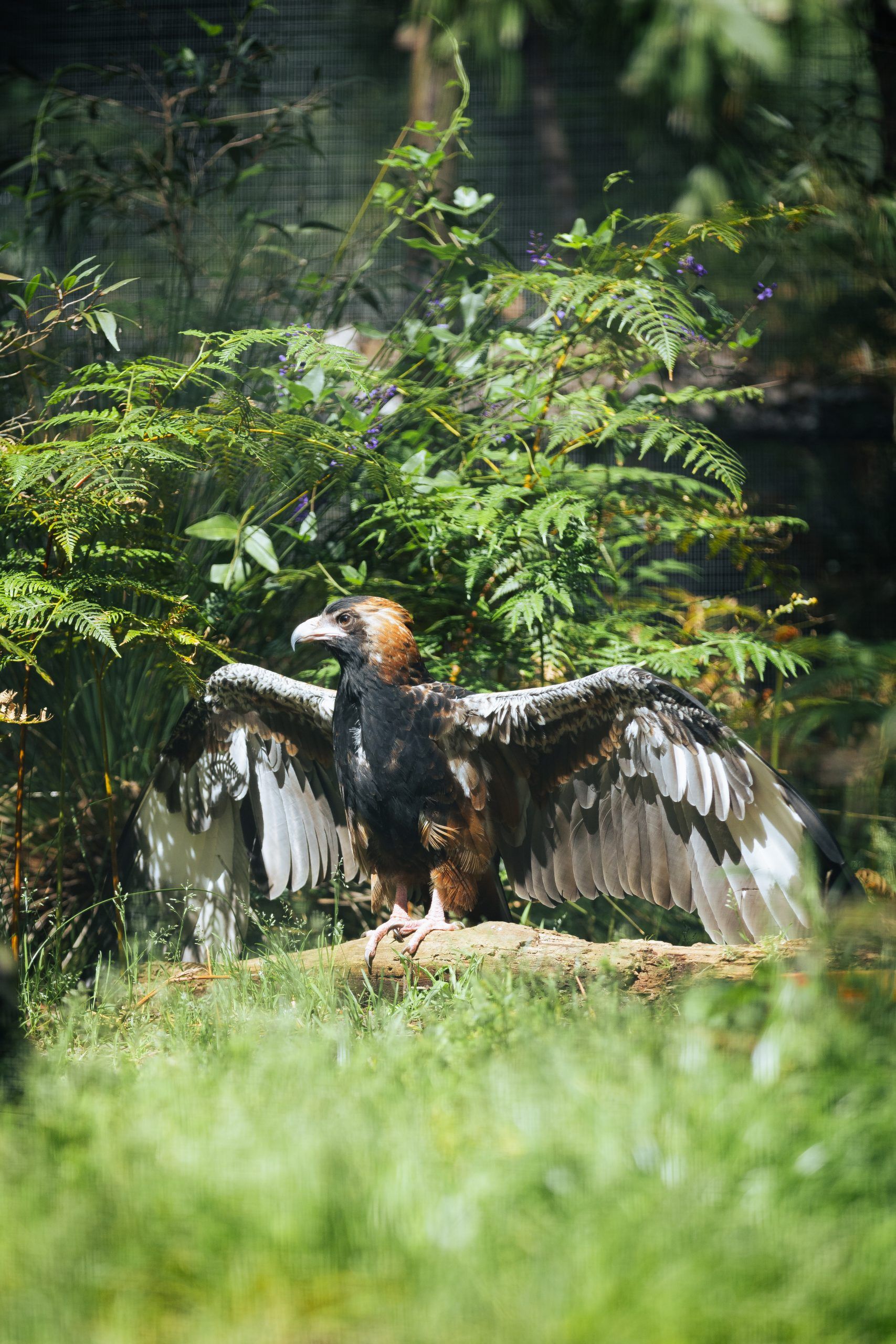
A Little Eagle, one of the Capes Raptor Centre's 60 residents. Photo: Holly Winkle

For bird welfare coordinator and environmental biologist Rob Kain, his purpose lies in the work spent one-on-one with the birds. Wild birds that come to the centre due to injury or illness require specialist care and often need to build their strength during rehabilitation before being released.

“Around 30% of a falcon’s total body weight is in its flight muscles,” Rob explains. “If they are in recovery for three or four weeks without flying, they lose that muscle, and the only way to regain it is through flight.”

Rehabilitation goes beyond basic strength. “We also need to improve their speed and reaction time. In the wild, if they see food pass by, they must react instantly, or they’ll miss out. Each species is unique, with its own hunting style and signature manoeuvres that require practice.”

Some raptors weave through treetops to hunt, some strike from above to the forest floor, and others, such as the peregrine falcon, dive from immense heights to snatch their prey mid-flight.

“It can be slow and repetitive work. Day to day, we’re gradually building on small steps, but when you make a breakthrough, that’s massive. That’s what motivates me to come in each day.”

The most focused work happens with the sanctuary’s permanent residents, like the educational ambassador birds that you can meet during the Bird of Prey Encounters. Unlike the rehab birds, their relationship with handlers is built intentionally and heavily trust based.

“The work we do with the educational birds takes a lot of time and patience,” Rob says. “Every interaction is led by them, and every experience must be purely positive, to build confidence and mutual respect. If they don’t want to interact on a particular day, we respect that. If they just want to sit in a tree for a while, that’s rewarding for them too.”

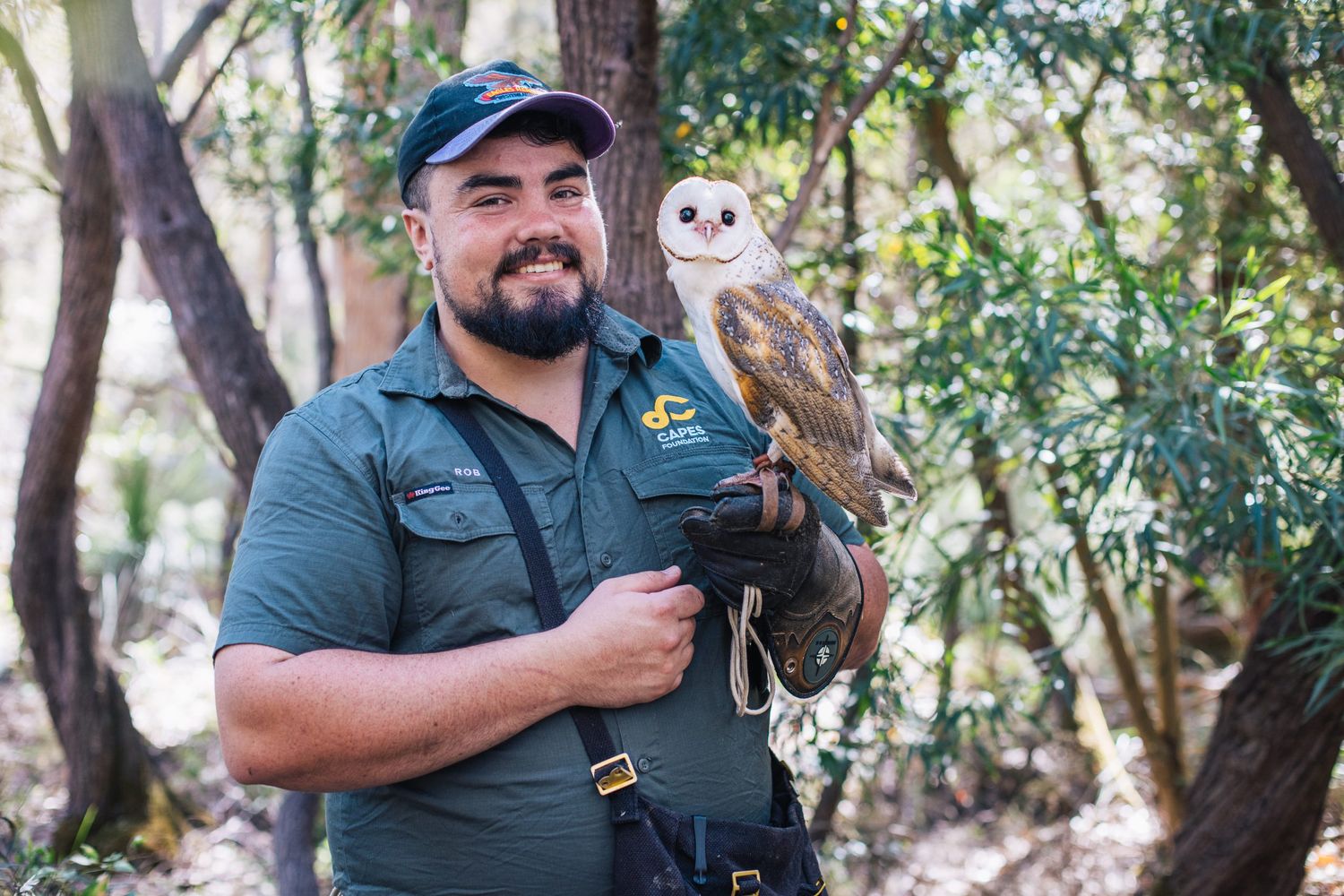
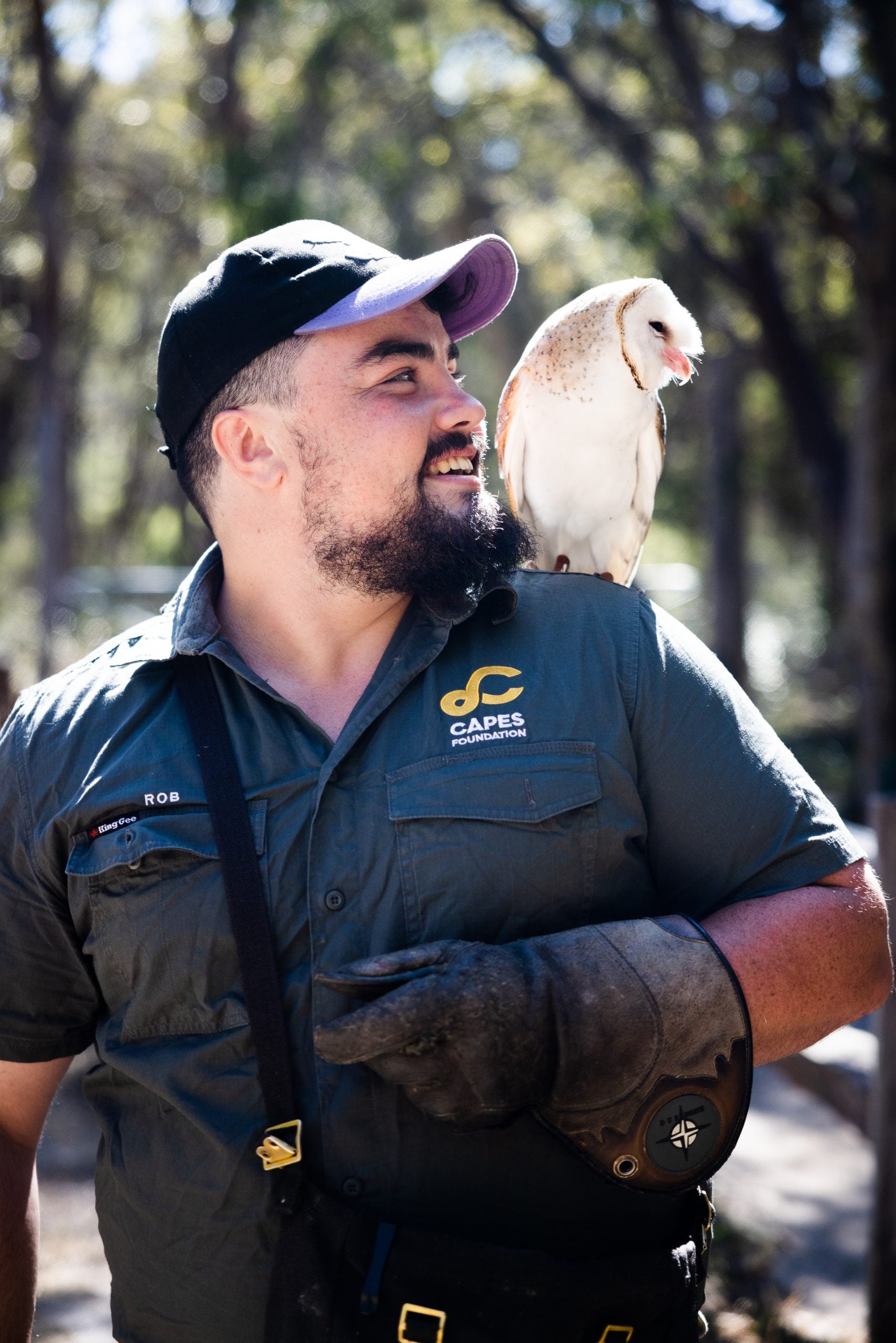
Rob and Alby the Barn Owl, handling things on the ground and in the air. Photo: Holly Winkle

When born into care, raptors experience the world differently. In the wild, life revolves around hunting, breeding and survival activities that can’t always be replicated.

“We want to give them a purpose,” says Rob. “They’re incredibly intelligent, and working with them to take part in the visitor encounters taps into those natural behaviours. It keeps them active, engaged and mentally stimulated.”

That’s where enrichment comes in, weaving its way through every part of the workday.

Enrichment is the practice of providing raptors with activities, environments and challenges that encourage natural behaviours, stimulate their sharp minds, and maintain physical health.

“Providing long-term enrichment for birds of prey that can’t return to the wild is a specialised area of wildlife care,” Rob says. “We’re always trialling ideas for our lifelong residents and documenting how they respond.”

Mrs Brown knows what’s up—sun, stretch, repeat. Turns out flat pancaking is the ultimate feather-care ritual. Photo: Pearse Dillon

In the wild, a large part of a raptor’s day is spent hunting. Food is a vital enrichment tool that can involve creative meal delivery, encouraging the birds to work a little for their food or providing the food in ways that suit their hunting style.

Some species that are sky hunters enjoy catching their meals in mid-air. “The collared sparrowhawk enjoys catching its mice,” Rob laughs. “The buzzards are very unique. They’re one of the only species of raptors in the world that use rocks to crack open eggs, so we regularly place eggs and rocks in their aviary for them to find.”

Mr Grace, the 19-year-old resident wedge-tailed eagle, gets meals he can really sink his talons into. “He has a wonderful time tearing his food apart, so we give him plenty of things to dismantle. Also, we regularly provide him with new barky perches with some rope, for example. He absolutely loves it.”

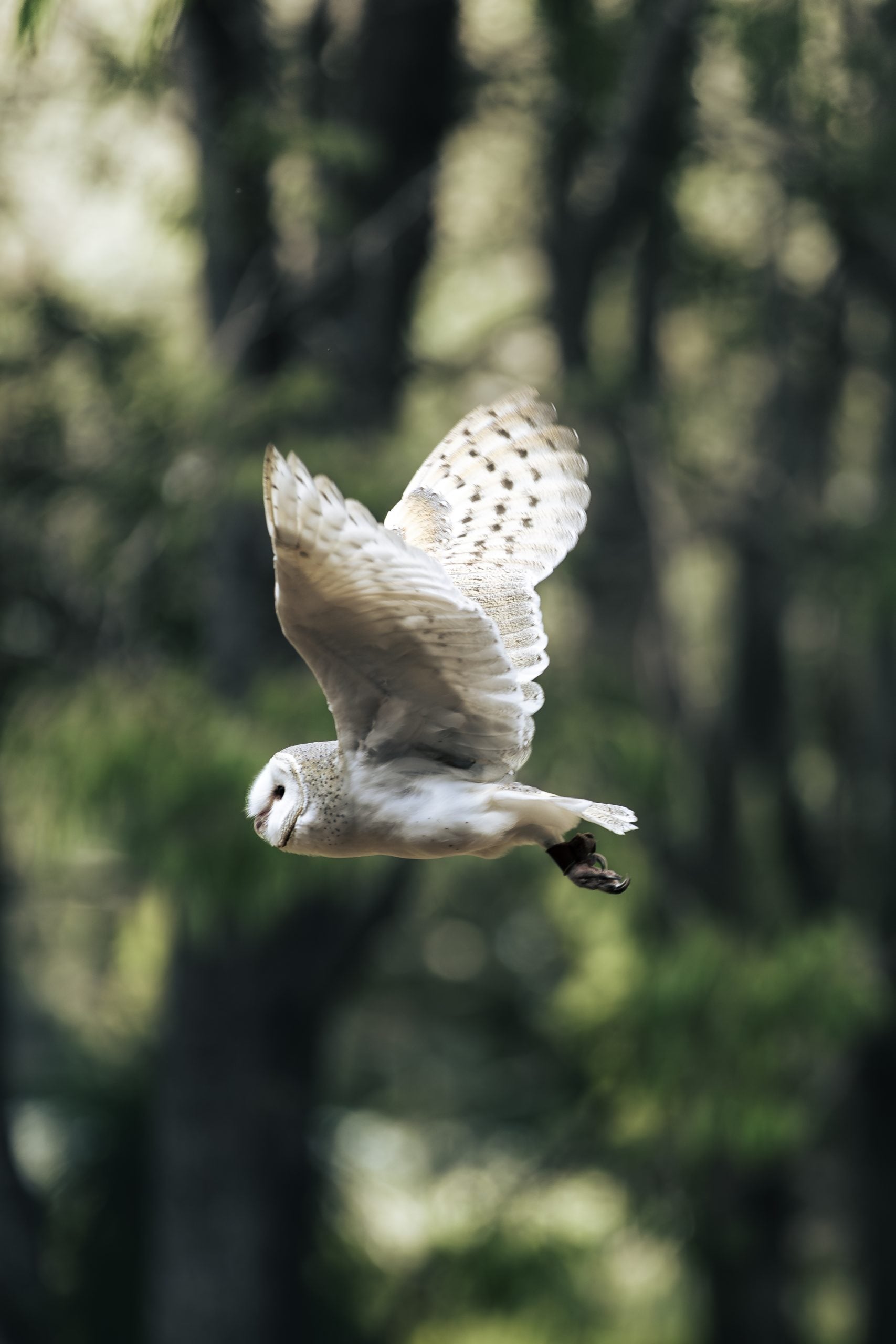
Blink and you’ll miss him, Alby in full flight. Photo: Pearse Dillon

The environment itself plays a significant role. Aviary design is tailored to each species and their hunting style, offering variety, challenge and choice.

“Jedda the wedgie builds lots of nests, so we make sure she always has plenty of new sticks,” says Rob. “We’re continually changing their perches and giving them new, natural materials to explore so that they can find their own fun.”

Rob’s goal is simple: to keep every bird, whether recovering or living permanently at the park, engaged, stimulated and healthy, and you can help him achieve this simply by visiting the next time you’re in Margaret River.

“At the end of the day, it’s our visitors who close the loop. By visiting and meeting these amazing birds, they’re learning about the important role our raptors play in our environment, what we can all do to help, and, being a not-for-profit, they’re directly supporting raptor conservation in the wild.”

Advice from a Local

Speak to a local expert Advice from a Local Our team of local experts

Our team of local experts are here to help plan and book your stay in the Margaret River Region.