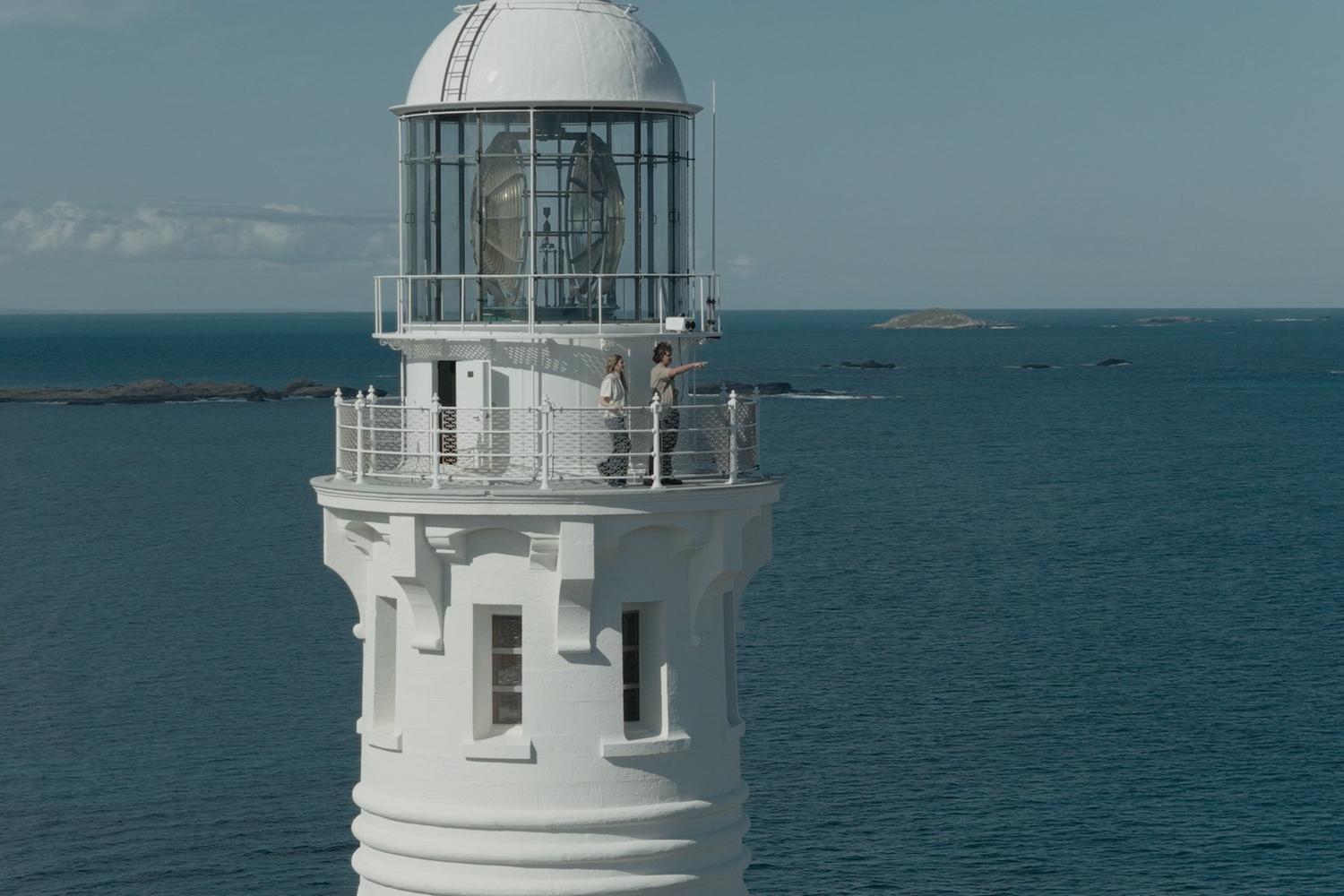
People standing on the balcony of Cape Leeuwin Lighthouse

Cape Leeuwin Lighthouse: where two mighty oceans meet

Learn about the historic Cape Leeuwin Lighthouse in Augusta and take a tour on your next visit to the Margaret River Region.

Published

Stand on the headland at Cape Leeuwin and you’re at the most south-westerly corner of the Australian mainland, looking out to where the Southern and Indian Oceans meet.

Since 1896, the Cape Leeuwin Lighthouse has watched over this stretch of the South West coast, guiding passing ships safely around the cape. It’s still a working lighthouse today, and you can climb all the way to the top.
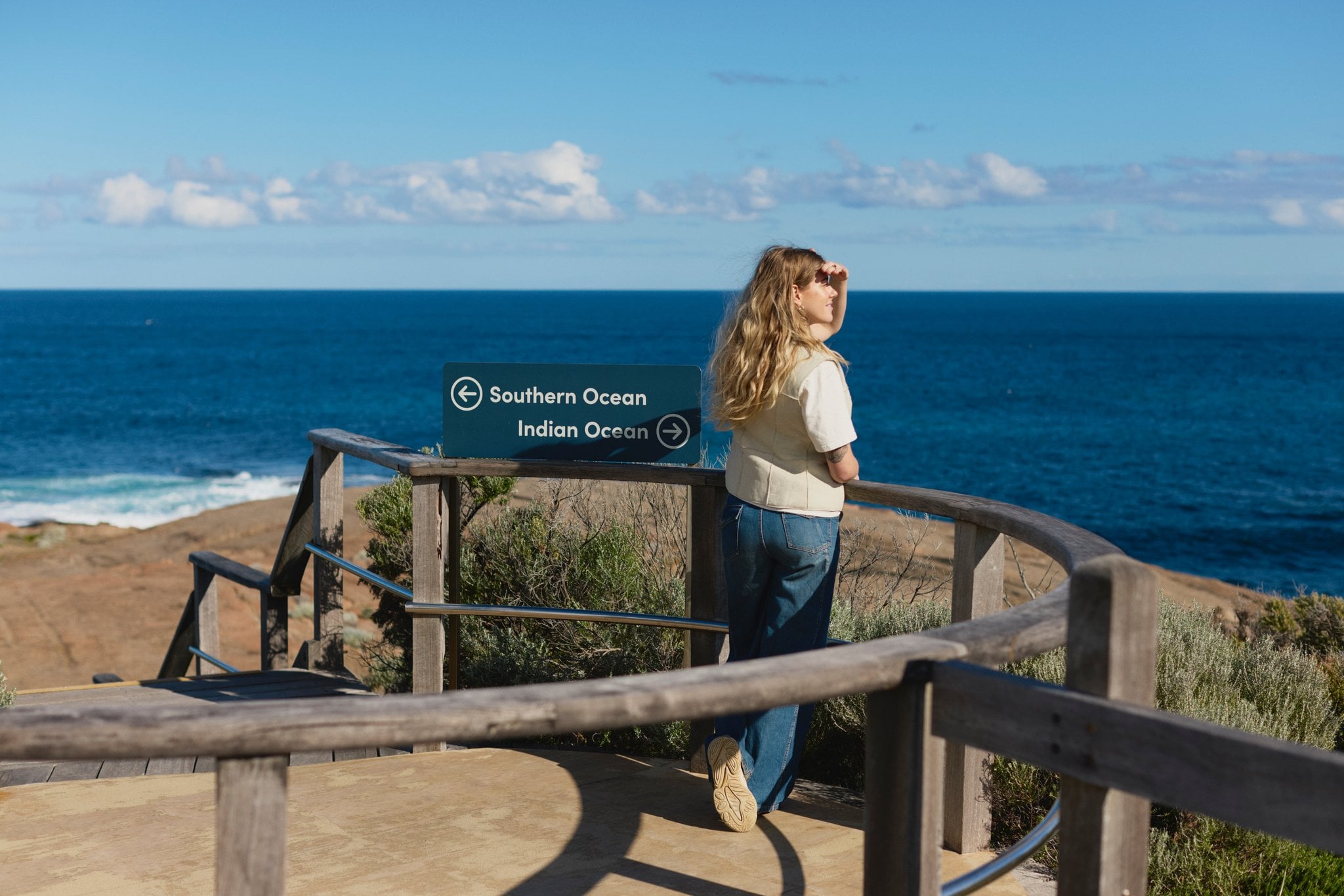
A person looking out to where two oceans meet at Cape Leeuwin Lighthouse
Take in the views across two oceans. Photo: Tim Campbell

One of the three great capes

Cape Leeuwin is one of the three great capes of the Southern Hemisphere, alongside the Cape of Good Hope in South Africa and Cape Horn in South America. Sailors have long respected these capes for their strong currents, big swells and sudden squalls, which is why a lighthouse here mattered so much.

The story of the Cape Leeuwin Lighthouse

Plans for a lighthouse at Cape Leeuwin first surfaced in 1881, but it took another 14 years for construction to begin. Western Australia could fund a project this size only after gold was discovered near Kalgoorlie. With ships heading to Albany, then the colony’s main port, Premier Sir John Forrest pushed for the lighthouse to go ahead.

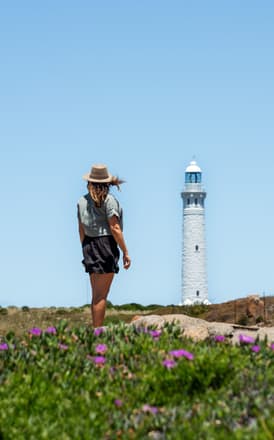
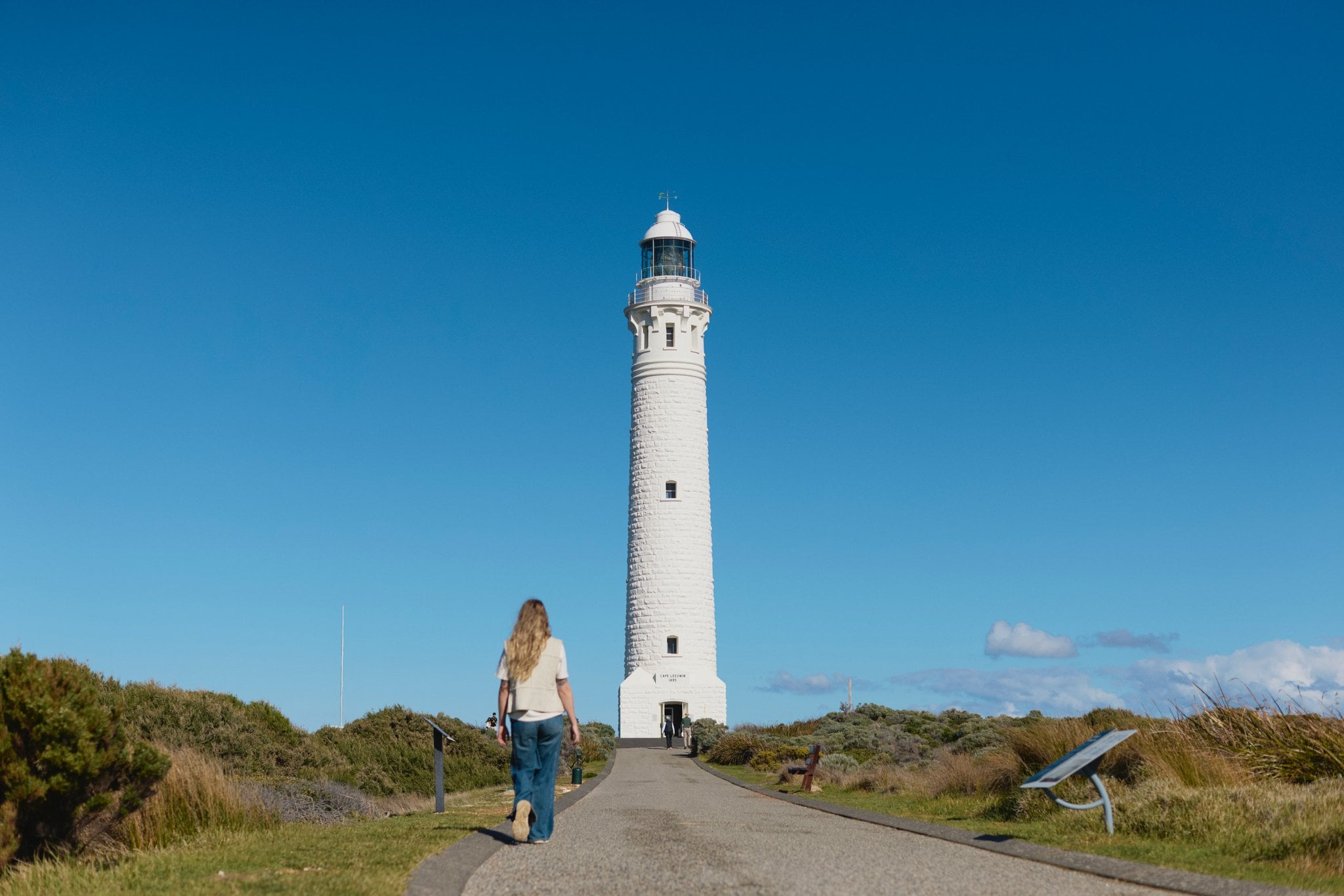
Person walking towards Cape Leeuwin Lighthouse, framed by blue skies
Walk up to the lighthouse’s limestone tower. Photo: Tim Campbell

The lighthouse was officially opened on 10 December 1896. A kerosene wick lamp, the world’s largest at the time, produced the light, while a clockwork mechanism turned the lens in a bath of mercury. With an intensity of 250,000 candelas, the light could be seen for 40km. By the 1920s, it had been upgraded to 780,000 candelas. In 1982, an electric light replaced the kerosene burner, and its 1,000-watt halogen lamp beamed out 1,000,000 candelas. Through all these changes, keepers still lived and worked at the cape.

That changed in September 1992, when Cape Leeuwin was fully automated. Today the Australian Maritime Safety Authority runs it, along with Australia’s other major lighthouses. Its light still flashes every 7.5 seconds, guiding ships safely past the cape.

Visiting Cape Leeuwin Lighthouse

The Cape Leeuwin Lighthouse is 9km from Augusta, 50km from Margaret River, and about 320km (a three-and-a-half-hour drive) from Perth. From the headland, you can watch the swell roll in from two oceans and feel the wind come straight off the water. Keep an eye out for pods of dolphins and, from June to September, whales on their annual migration.

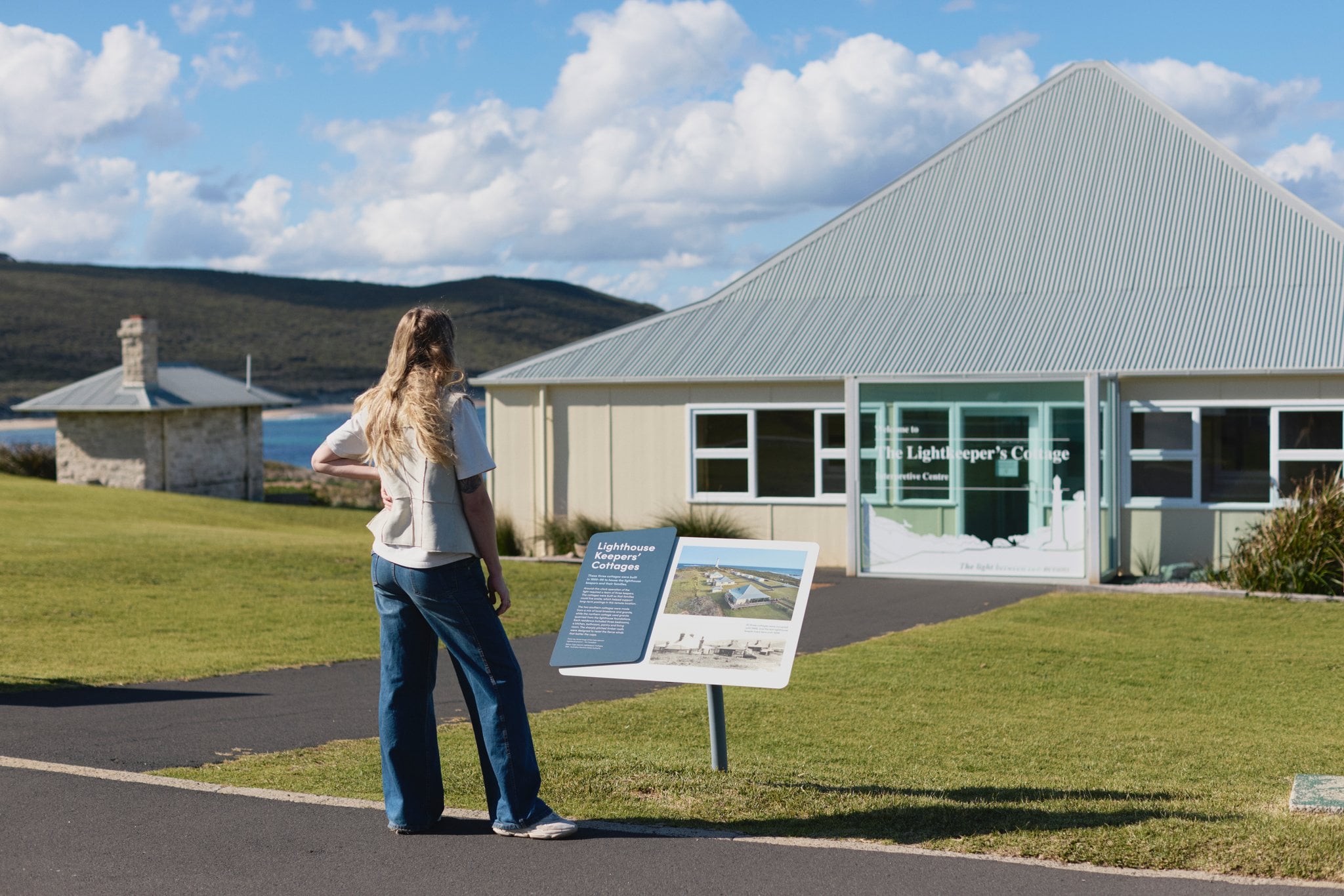
Person reading the signs on the Cape Leeuwin Lighthouse grounds, in front of the Lightkeepers Museum
The Cape Leeuwin Lighthouse is open to the public seven days a week. Photo: Tim Campbell

On a half-hour guided tour, you’ll climb the 176 steps of the tallest lighthouse on the Australian mainland and hear the stories of the ships wrecked off this coast and the keepers who watched over it. By the time you reach the top, 39m up, you’ll have a good idea of how fit those keepers must have been. For safety reasons, tours aren’t available for children under four.

Three of the four original lighthouse keepers’ cottages still stand. One is home to the Lightkeepers’ Museum, where artefacts, stories, interactive displays and a large-scale animated film give you a feel for the lives of the men, women and children who once lived at the cape.

Whether you visit on a balmy South West summer’s day or when the winter winds are blasting in, you’ll see why sailors have relied on this light for well over a century.

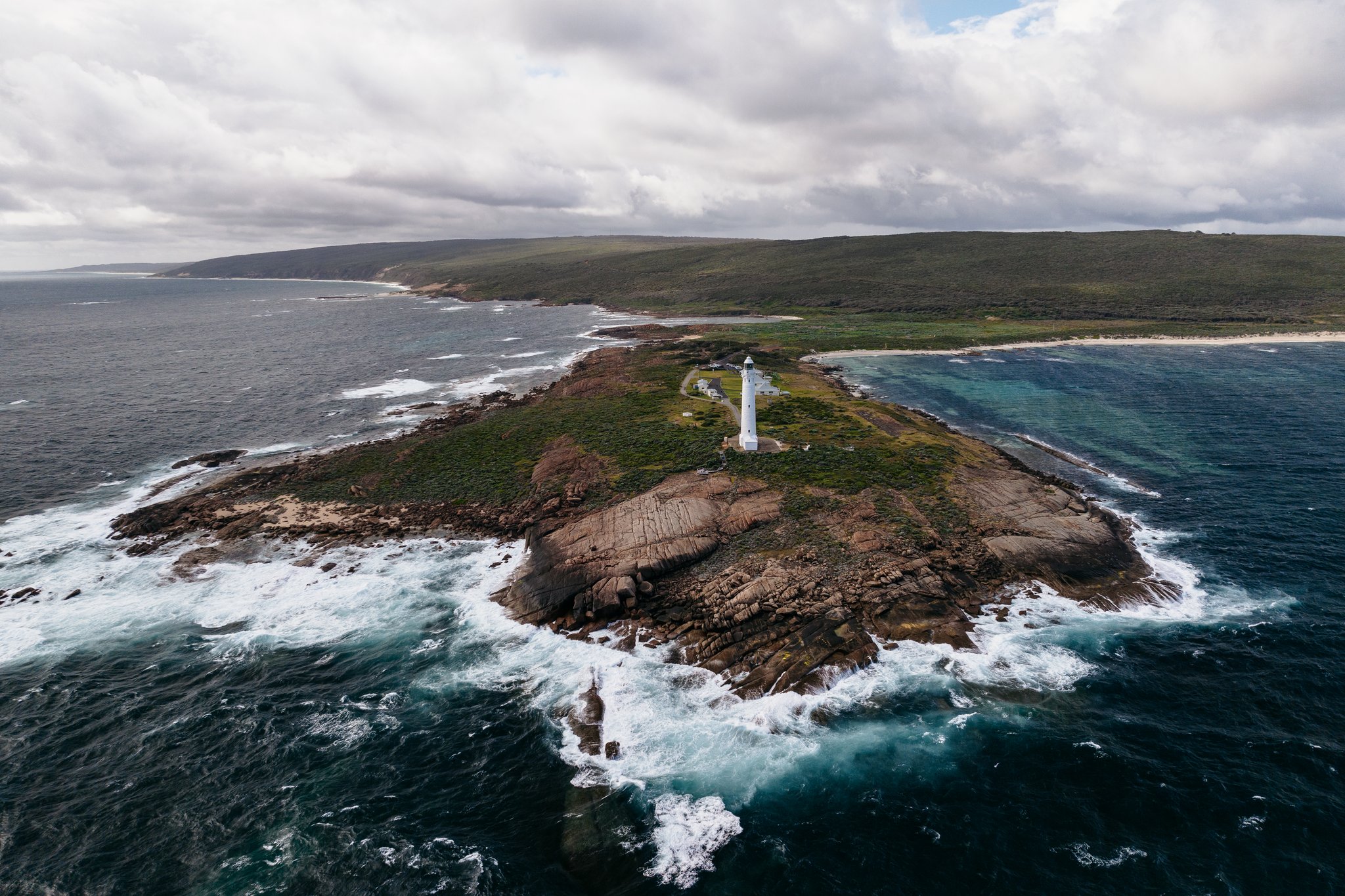
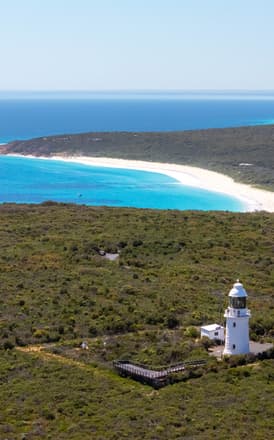
Ariel image of the full sight of Cape Leeuwin
Stunning Cape Leeuwin is well worth the trip. Photo: Tourism WA

Advice from a Local

Speak to a local expert Advice from a Local Our team of local experts

Our team of local experts are here to help plan and book your stay in the Margaret River Region.