The Wadandi Track: From rail to trail

Step off the beaten path and into history. Don’t worry, you won’t need a map.

Published

Underfoot, history, culture, and adventure collide inviting explorers to follow paths of the past, all while enjoying some of the Margaret River Region’s most stunning scenery.

Before there were roads, there were paths. From quiet tracks forged through forested wilderness by the Wadandi People, to the timber rails that powered a growing region, the South West is shaped by the pathways of others.

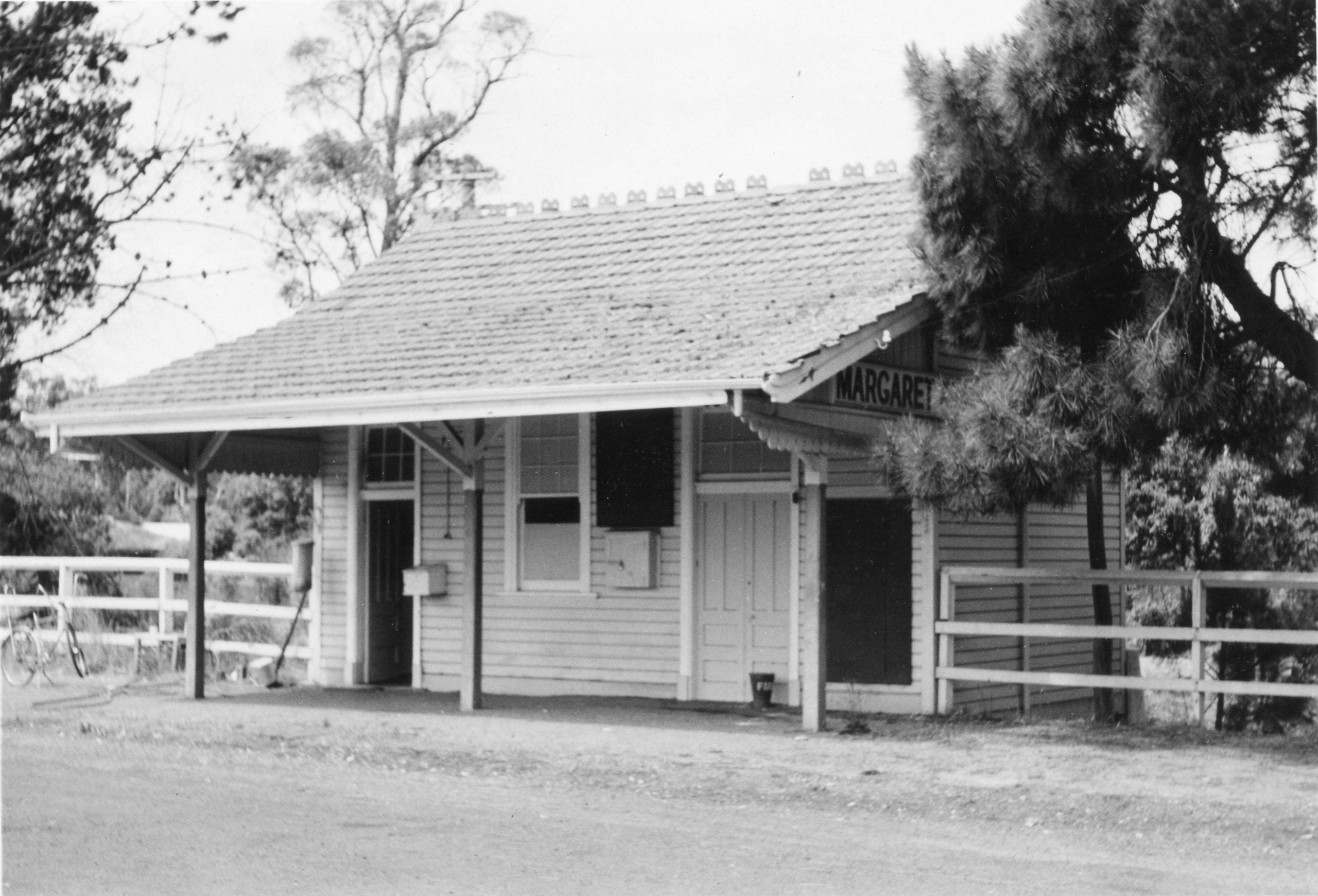
Margaret River Railway Station, back when the journey was by rail. Photo: Rail Heritage WA.

Paths through time

In the 19th century, most Western Australians saw the land south of Busselton as little more than endless forest. But the Wadandi People, the traditional custodians of this region, had known this Country for countless generations, moving with the seasons along a network of coastal and inland paths.

When British settlers arrived, a few hardy pioneers began clearing small patches of forest around their isolated farms, planting crops and fruit trees while their stock grazed on native grasses. Over time, the region’s timber resources attracted ambitious timber men, who battled the giant trees to feed Western Australia’s growing colony.

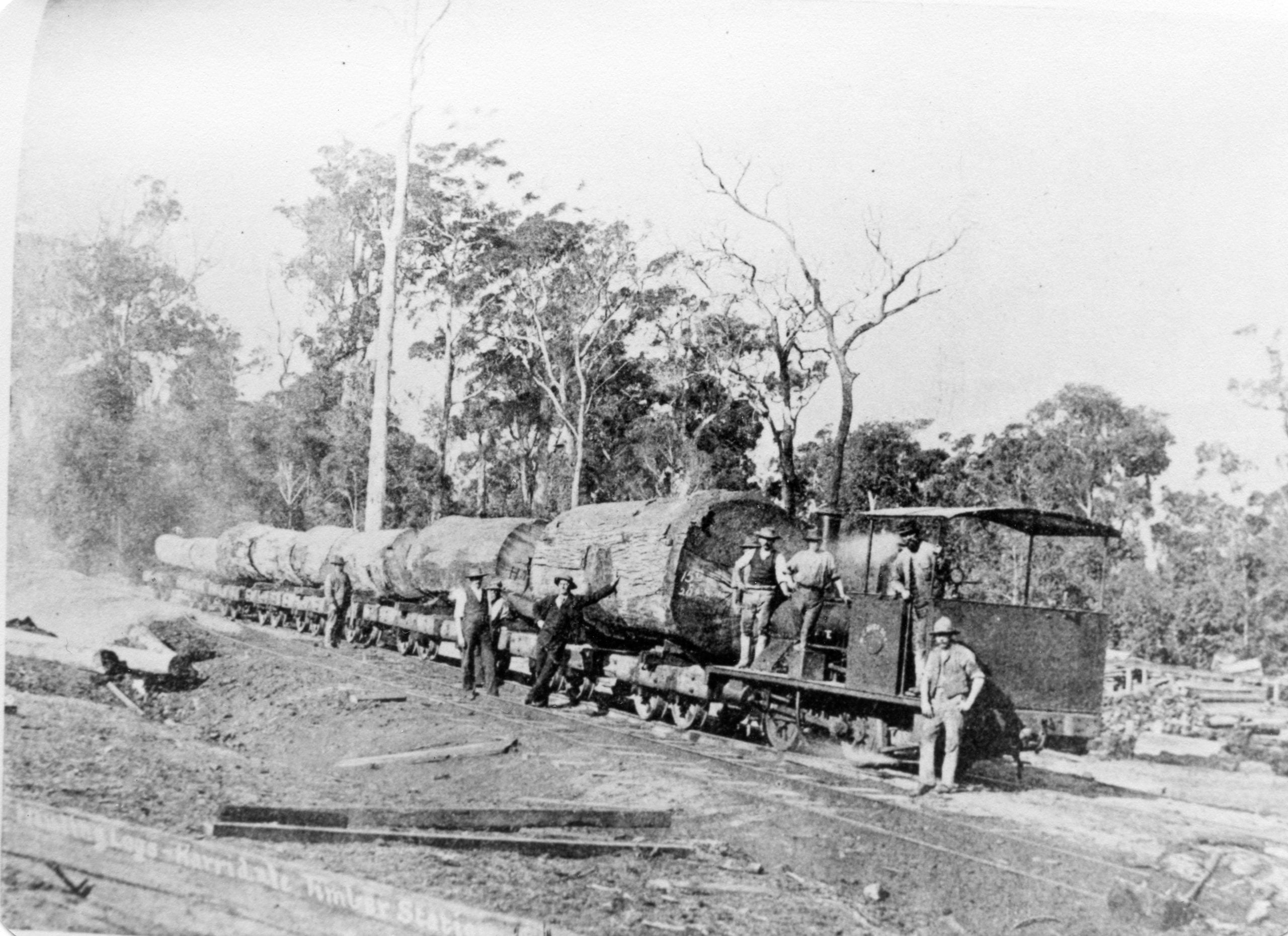
Timber, trains and a hefty load: M.C. Davies’ locomotive Kate hauling karri logs at Karridale in the 1890s. Photo: Rail Heritage WA.

Timber, trains and tenacity

George Simpson, a Ballarat miner, led a group of Victorian investors to build a jetty and mill in Wonnerup, connecting it inland to Yoganup with a railway. In 1871, Western Australia’s first locomotive arrived from Victoria to serve Simpson’s timber company. Today, the restored Ballarat sits proudly at the Busselton Jetty, a reminder of those rough and tumble days.

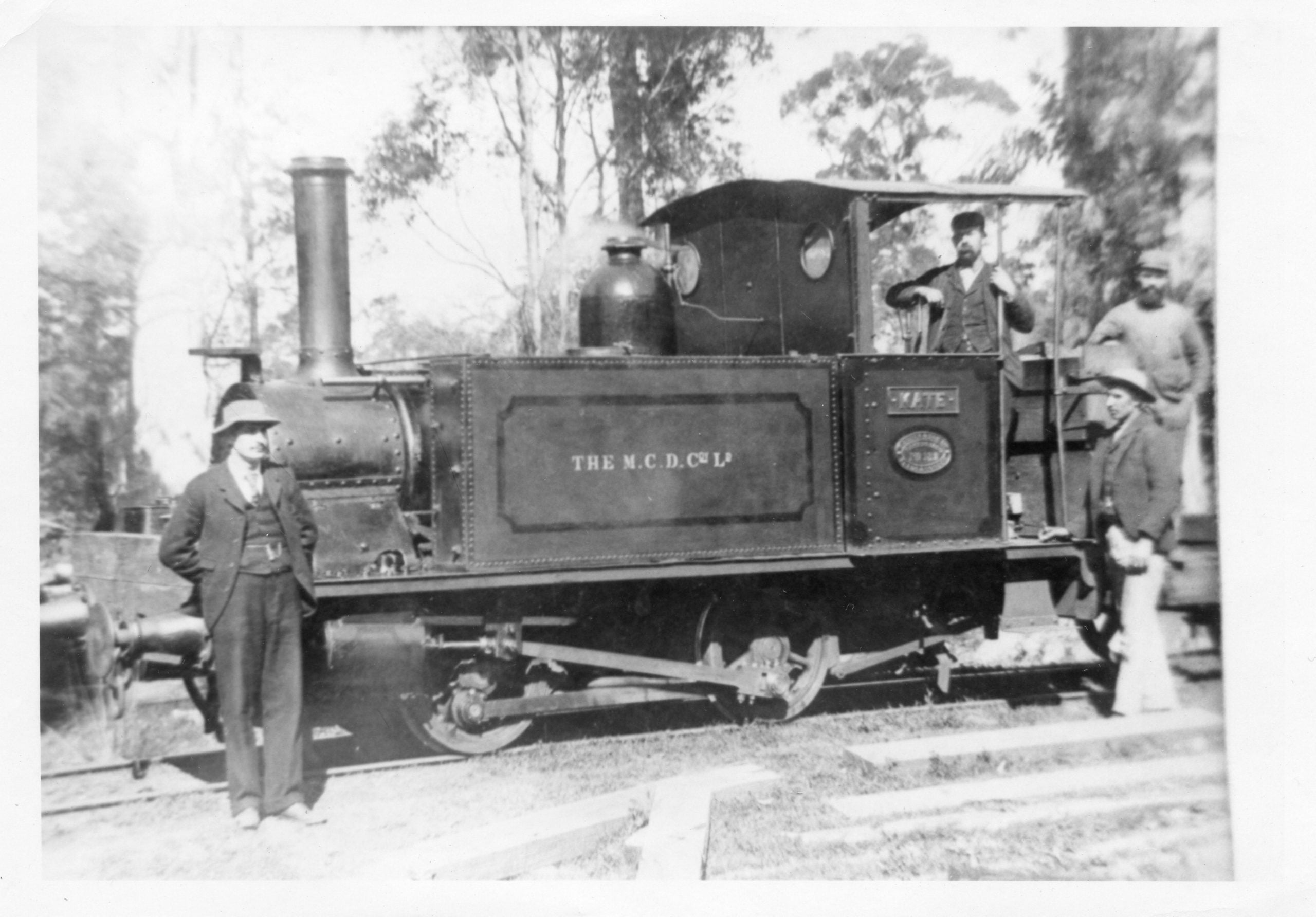
Henry Yelverton established one of the first steam-powered sawmills in the county, with a jetty at Quindalup and a rail line extending south toward Margaret River. Maurice Davies, an Adelaide-based contractor, built his main timber station at Karridale, extending rail lines northwards through karri and jarrah forests to Flinders Bay and Hamelin Bay. His first steam locomotive, Kate, purchased in 1895, can still be seen at Margaret River’s Rotary Park.

The timber men built light, functional infrastructure designed to get the job done, not to last. By the turn of the 20th century, forests were thinning, timber profits dwindled, and the big mills moved on.

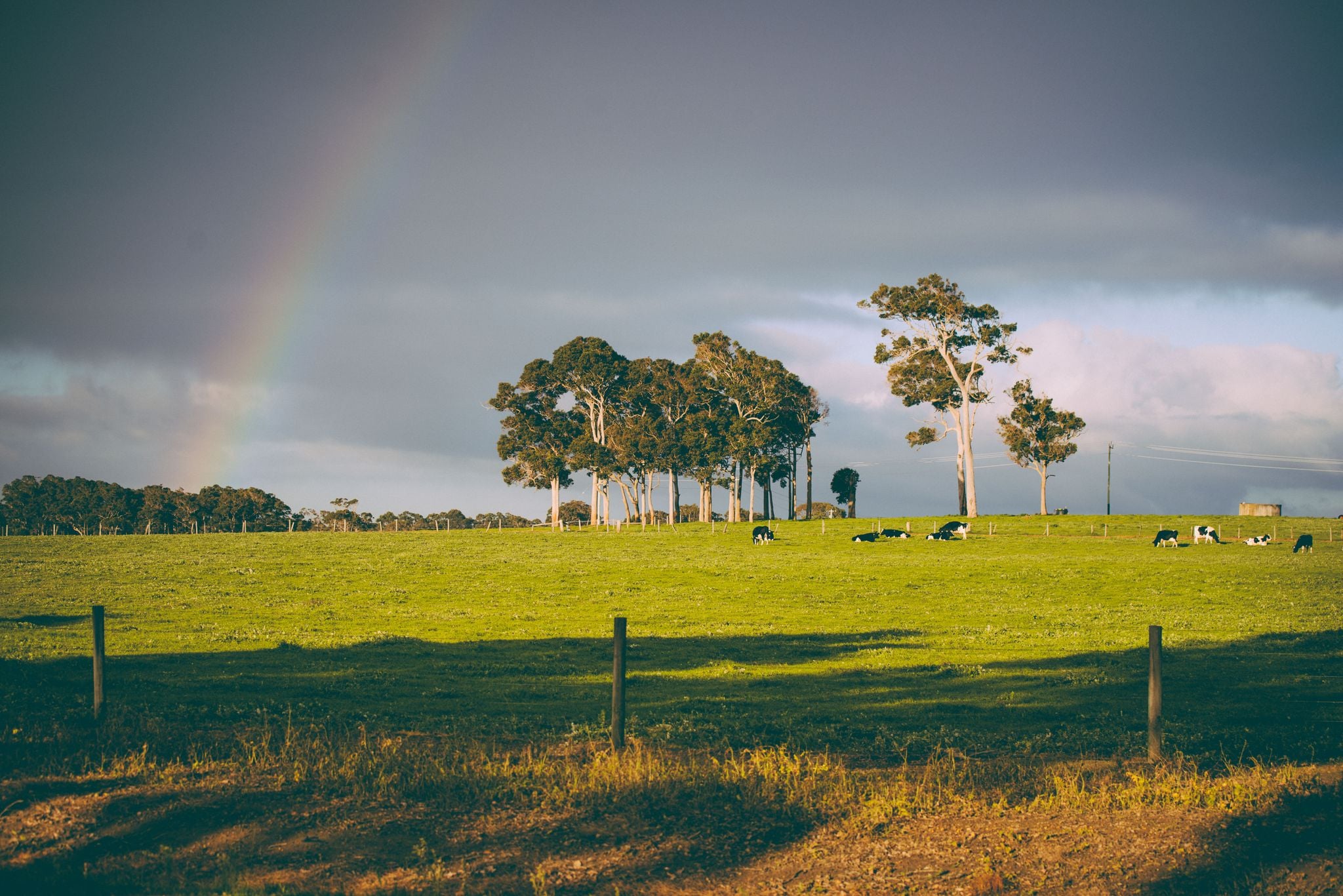
Cows grazing in a sunlit green paddock near Cowaramup, with tall trees and a rainbow beneath grey clouds
Cows and countryside, another chapter in the region’s agricultural story. Photo: Elements Margaret River

Agriculture takes root

At the same time, a lands department inspector assessed the region’s farming potential. He highlighted the pleasant climate, 30-inch rainfall, and rich ‘chocolate’ soils capable of growing almost anything. His report prompted the government to consider the area for agriculture, particularly dairy farming.

Support grew for the government to take over the decaying timber railways. After World War I, a government railway connected Busselton through Margaret River to Augusta and Flinders Bay, largely following the former Yelverton and Davies rail lines. Steam trains ran from Busselton to Witchcliffe in 1924, reaching Augusta the following year. But by 1957, economic pressures and the rise of road transport ended the railway.

From rails to trails

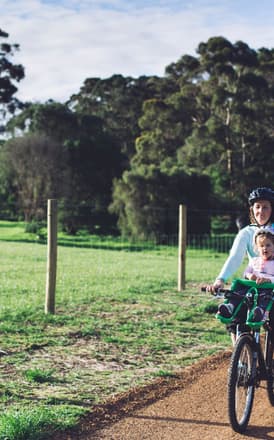
The gentle curves and gradients of these disused rail corridors created perfect paths for walkers and cyclists. The old rail route between Busselton and Augusta became the Wadandi Track, honouring the original Aboriginal pathways that had guided both people and settlers for centuries. Local governments have worked steadily to rehabilitate the track from end to end, offering a safe, scenic route for non-motorised travellers.

Meet Kate: M.C. Davies’ locomotive pictured in her original condition at Karridale in the 1890s. Photo: Rail Heritage WA.

The Unbeaten Tracks Alliance

In 2020, the Unbeaten Tracks alliance was formed promoting a visionary 300-kilometre non-motorised trail loop. In 2024, the WA Government allocated $17.5 million to help the City of Busselton and Shire of Augusta-Margaret River connect the Wadandi Track from Busselton to Augusta.

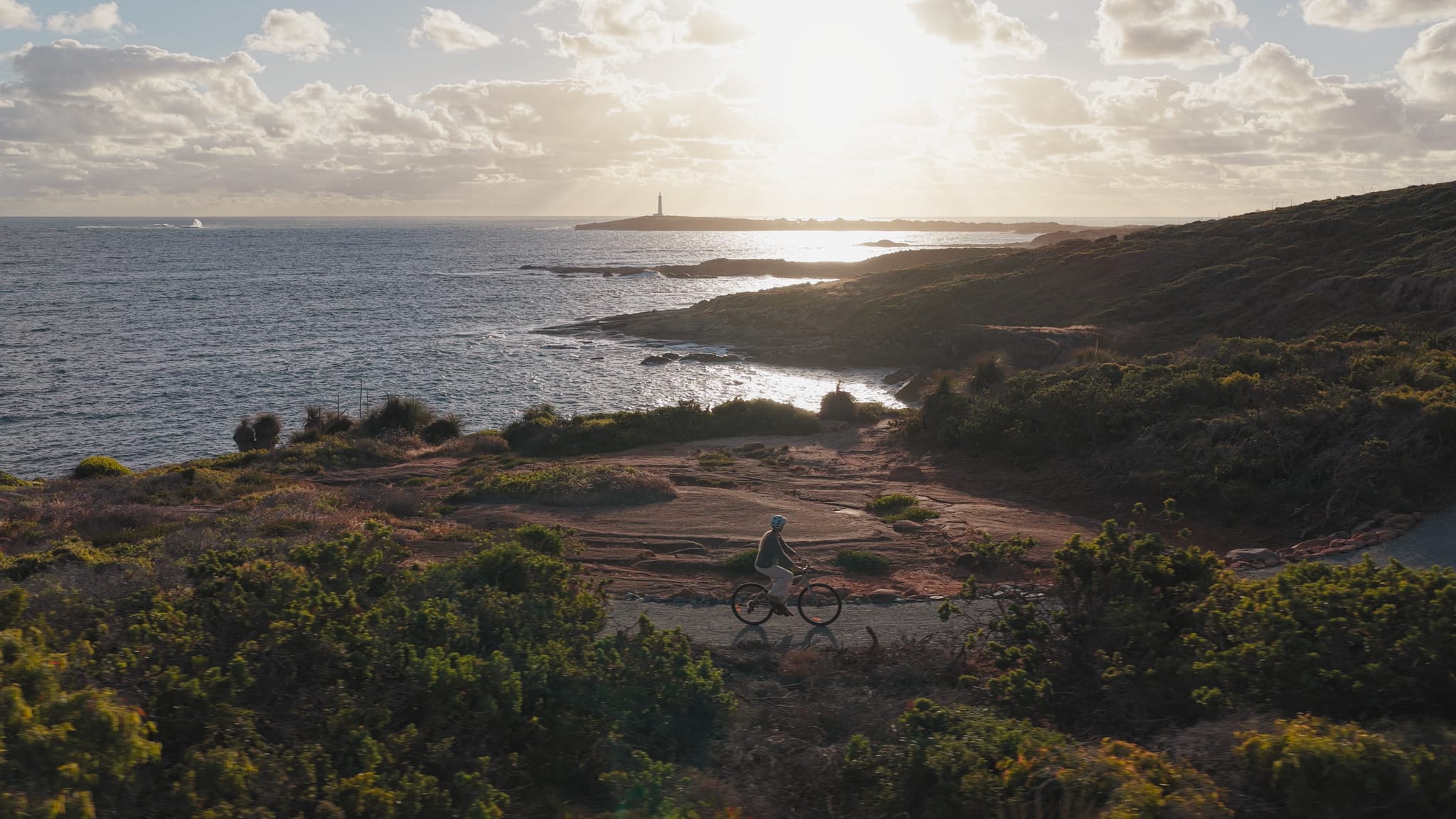
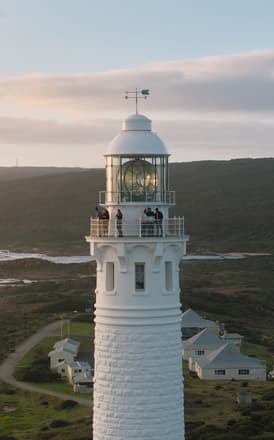
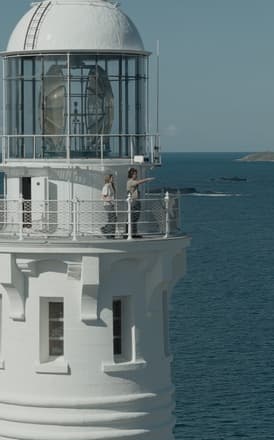
In December 2025, the Shire of Augusta-Margaret River opened the Leeuwin Biddi, a coastal section between Dead End and Cape Leeuwin Lighthouse. Together, these trails will form part of one of Australia’s most remarkable non-motorised journeys and a chance to walk or ride through ancient pathways, timber heritage and living landscapes.

A person riding a bike along a coastal gravel path
From rail to trail: a bird’s-eye view of Leeuwin Biddi and the landscape at the heart of the story. Photo: Tim Campbell.

Advice from a Local

Speak to a local expert Advice from a Local Our team of local experts

Our team of local experts are here to help plan and book your stay in the Margaret River Region.